

The molecular integrity of a synthetic 15-amino acid chain is fundamentally dependent on the mechanical precision of its transition from lyophilized powder to liquid solution. In high-level laboratory settings, the process of bpc-157 reconstitution is more than a simple mixing task; it's a critical protocol that dictates the analytical validity of the entire research project. Even minor errors in solvent choice or physical agitation can lead to peptide degradation, rendering a high-purity compound ineffective for precise cellular study.
Researchers often face valid concerns regarding concentration math and the long-term stability of the resulting solution. We understand that maintaining scientific integrity requires a disciplined approach to every variable in the laboratory environment. This technical guide provides the exact scientific protocols needed to ensure your BPC-157 remains stable and viable for the duration of your study. You'll gain a clear understanding of precise dilution ratios, the necessity of bacteriostatic water for multi-dose stability, and the specific handling techniques that prevent structural damage to the peptide. By following these established standards, you ensure that the quality of your compounds speaks for itself through consistent, verifiable research outcomes.
Key Takeaways
- Understand the biochemical transition from lyophilised powder to an active aqueous solution while preserving the pentadecapeptide's molecular structure.
- Implement a rigorous bpc-157 reconstitution protocol that utilizes pressure equalisation and slow diluent entry to prevent peptide shearing.
- Identify the essential aseptic materials and laboratory conditions required to maintain a sterile environment during the preparation of research compounds.
- Apply precise thermal storage standards, maintaining solutions between 2°C and 8°C to maximize the stability of the compound once reconstituted.
- Verify the role of high-purity sourcing and analytical testing in ensuring that reconstitution leads to predictable and high-integrity research outcomes.
The Science of BPC-157 Lyophilisation and Reconstitution
The BPC-157 peptide is a synthetic pentadecapeptide, a specific sequence of 15 amino acids. In its active state, this compound requires a precise aqueous environment to maintain its molecular functionality. For laboratory distribution and long-term storage, the peptide is transitioned into a stable, solid state through lyophilisation. This process is essential for maintaining the compound's analytical value until it's required for study. The subsequent phase, bpc-157 reconstitution, serves as the critical reactivation stage where the lyophilised material is returned to a liquid form. All protocols described herein are strictly for research-use only and are not for human consumption.
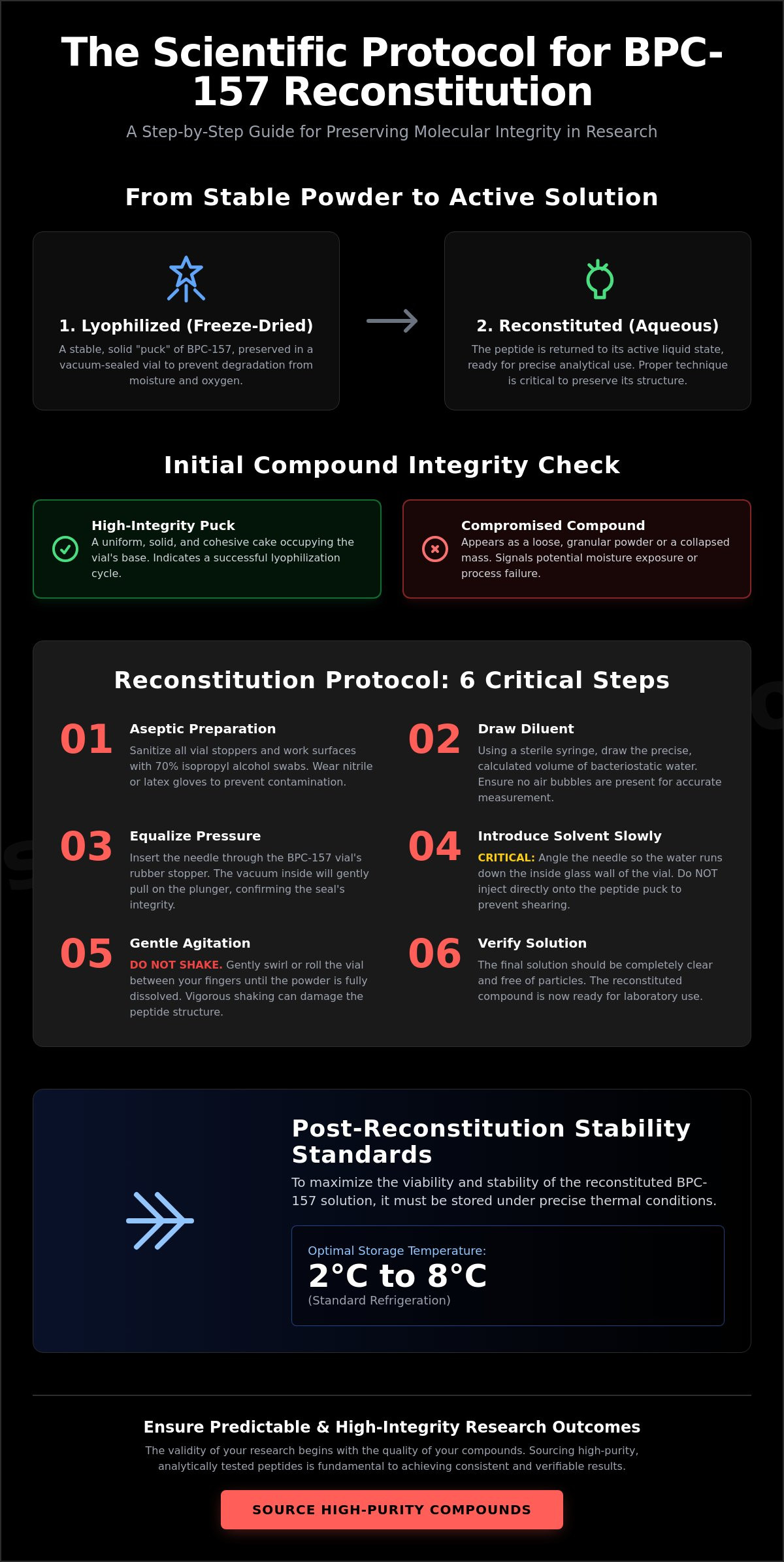
Lyophilisation, or freeze-drying, involves the removal of water from the peptide solution through sublimation under a vacuum. This technical process results in a "puck," which is a solid, porous cake that occupies the original volume of the frozen solution. A high-purity lyophilised puck should appear uniform and cohesive within the vial. If the material appears as a loose, granular powder or a collapsed mass, it often indicates a failure in the freeze-drying cycle or subsequent exposure to moisture. Such morphological defects can signal compromised molecular integrity.
Molecular Stability in a Vacuum-Sealed Environment
Peptide hydrolysis occurs when moisture interacts with the amino acid chain, leading to the irreversible breaking of peptide bonds. By removing water during the freeze-drying phase, the peptide is rendered chemically inert and stable for extended periods. The vials are vacuum-sealed to prevent oxidative degradation, as oxygen exposure can alter the sensitive molecular structure. The integrity of this vacuum is paramount; a compromised seal leads to rapid degradation before the research begins. Researchers must verify the vacuum seal's presence during the initial diluent entry to ensure the compound has remained protected from atmospheric contaminants.
Solubility Profiles of BPC-157
BPC-157 is inherently hydrophilic, meaning it exhibits a high affinity for water and dissolves rapidly in aqueous media. While this solubility is advantageous for creating a homogeneous solution, it presents a specific risk during the bpc-157 reconstitution process. The sudden, high-pressure introduction of a diluent can cause mechanical shearing. This physical force can disrupt the peptide's delicate structure, leading to inaccurate research data. For a more comprehensive chemical analysis of these properties, researchers should reference the BPC-157 5mg: Molecular Profile and Laboratory Research Standards for 2026. Reconstitution is the controlled reactivation of a dormant molecular tool, requiring a disciplined approach to liquid handling.
Essential Laboratory Materials for Precise Reconstitution
Precision in the analytical environment is a fundamental requirement for valid research outcomes. Because BPC-157 is classified as an unapproved drug for human consumption, all handling must occur within a strictly controlled laboratory bench or clean-room setting. Maintaining scientific integrity during bpc-157 reconstitution necessitates a specific inventory of aseptic tools. These materials are designed to prevent the introduction of exogenous contaminants that could interfere with the peptide's molecular profile or the eventual assay results.
The following mandatory tools must be prepared before the vacuum seal of a lyophilised vial is breached:
- 70% Isopropyl alcohol swabs for surface and stopper sanitization.
- Sterile, single-use syringes (standardly 1mL for microlitre accuracy).
- High-gauge transfer needles to minimize stopper fragmentation.
- Nitrile or latex laboratory gloves to prevent cross-contamination from skin oils or epithelial cells.
The use of high-purity diluents is equally critical. Any impurities in the solvent can lead to peptide aggregation or unintended chemical reactions. Researchers seeking to maintain the highest standards often source their compounds and high-purity laboratory supplies from verified vendors to ensure batch-specific consistency.
Selecting the Correct Diluent: Bacteriostatic Water vs. Sterile Water
Bacteriostatic water is the standard diluent for longitudinal research. It's defined as sterile water for injection containing 0.9% benzyl alcohol, which serves as a bacteriostatic agent. This additive inhibits the proliferation of potential bacterial contaminants, allowing the reconstituted solution to remain stable for multi-dose use over several weeks. In contrast, plain sterile water lacks a preservative. Once the vial is breached, any solution prepared with sterile water must be used within 24 hours to avoid the risks associated with microbial growth.
Syringe and Needle Calibration for Microlitre Precision
For accurate bpc-157 reconstitution, 1mL tuberculin or insulin-style syringes are recommended due to their fine graduation marks. These allow for the precise volume measurements required to achieve specific concentrations. The needle gauge also plays a role in the process; a needle that is too large can disrupt the internal vacuum too rapidly, causing the diluent to spray directly onto the peptide puck and potentially causing mechanical damage. Dead space refers to the residual volume of fluid that remains within the syringe hub and needle after the plunger is fully depressed, which can lead to significant errors in calculated peptide concentrations if not accounted for during the measurement phase.
Standard Protocol for BPC-157 Reconstitution
The process of bpc-157 reconstitution must begin with proper thermal equilibration. Before the aseptic protocol commences, the lyophilised vial should be removed from 2°C to 8°C storage and allowed to reach ambient laboratory temperature, typically 20°C to 25°C. This step mitigates the risk of atmospheric moisture condensing on the cold vial surface or within the peptide matrix upon breaching the seal. Once equilibrated, the following standardized protocol ensures the maintenance of molecular integrity.
- Sanitize the rubber stoppers of both the diluent vial and the peptide vial using 70% isopropyl alcohol swabs. Allow the alcohol to evaporate completely to prevent its entry into the vial.
- Equalise the internal pressure of the peptide vial. This prevents the "vacuum suck" effect that can lead to an uncontrolled, rapid influx of diluent.
- Introduce the diluent slowly by angling the needle so the liquid runs down the interior glass wall of the vial. Direct contact between the liquid stream and the lyophilised puck must be avoided.
- Allow the solution to clarify naturally. Aggressive agitation or shaking can disrupt the delicate peptide bonds and lead to denaturation.
- Document the specific date of reconstitution and the final concentration on the vial label to ensure longitudinal accuracy.
Concentration Calculations and Dilution Math
Precision in concentration is vital for reproducible research. The standard formula for determining the concentration of a solution is: Total mass (mg) / Volume of diluent (mL) = Concentration (mg/mL). For example, if a 5mg vial of BPC-157 is reconstituted with 2mL of BAC Water, the resulting concentration is 2.5mg/mL. In many laboratory settings, it's necessary to convert these values to micrograms (mcg) for precise aliquotting; 1mg is equivalent to 1,000mcg. Therefore, a 2.5mg/mL solution contains 2,500mcg per millilitre. These calculations must be verified before the first aliquot is drawn to maintain the scientific integrity of the study.
Handling the Vacuum and Pressure Equalisation
Research-grade vials are typically vacuum-sealed to protect the compound from oxidative degradation. However, this vacuum exerts a significant pull on the syringe plunger. To manage this physics-driven force, the researcher should draw a volume of air into the syringe equal to the intended volume of diluent. After inserting the needle into the peptide vial, the air should be slowly injected to equalise the pressure. Failure to perform this step often results in a "spraying" effect, where the diluent is forced into the vial with enough velocity to denature the peptide's molecular structure. Maintaining control over the flow rate is a hallmark of professional bpc-157 reconstitution standards.
Stability Standards and Post-Reconstitution Storage
Following the successful completion of bpc-157 reconstitution, the peptide solution resides in its most chemically active and vulnerable state. The transition from a lyophilised solid to an aqueous solution introduces variables that can rapidly accelerate molecular degradation. To preserve scientific accuracy, the solution must be stored within a strictly maintained refrigeration range of 2°C to 8°C (36°F to 46°F). Exposure to temperatures outside this window leads to thermal degradation, which compromises the compound’s purity and potentially invalidates longitudinal research data.
Environmental stressors must be meticulously managed to prevent premature breakdown of the amino acid sequence. These include:
- Ultraviolet (UV) Light: Photodegradation can occur when peptides are exposed to direct light. The use of amber vials or light-blocking storage containers is recommended.
- Thermal Fluctuations: Frequent removal from cold storage causes repeated temperature shifts that stress the molecular bonds.
- Kinetic Energy: Physical agitation can lead to mechanical denaturation.
Ensuring that your laboratory possesses the necessary high-purity research compounds and storage equipment is the first step in maintaining these rigorous standards.
Cold Chain Management for Research Integrity
A common error in laboratory management is the freezing of reconstituted solutions. While lyophilised powder is often stored at -20°C, the aqueous form must never be frozen. The formation of ice crystals creates physical shearing forces that can tear the peptide bonds apart, rendering the solution biologically inactive. This commitment to rigid storage protocols aligns with the "Making better, normal" philosophy, where baseline scientific standards are never compromised for convenience. For researchers requiring comparative data on peptide longevity, the Ipamorelin: A Molecular Profile and Technical Overview for Laboratory Research provides additional insights into how different sequences respond to cold chain variables.
Kinetic Sensitivity: The Danger of Agitation
Peptide denaturation refers to the process where the compound loses its quaternary, tertiary, or secondary structure. In the context of bpc-157 reconstitution, this is often caused by kinetic stress. If the lyophilised puck doesn't dissolve immediately, researchers must resist the urge to shake the vial. Instead, a gentle, horizontal swirling motion should be employed. A compromised solution often exhibits visual indicators such as persistent cloudiness, precipitation, or the presence of visible particulates. If any of these signs appear, the solution’s integrity is lost, and it should be discarded to maintain the analytical validity of the study.
Ensuring Research Integrity with High-Purity BPC-157
The ultimate success of any bpc-157 reconstitution protocol is predicated on the foundational purity of the lyophilised material. While precise handling and storage are critical, they cannot compensate for a compound that contains residual solvents, truncated sequences, or synthesis byproducts. High-Performance Liquid Chromatography (HPLC) is the analytical standard for verifying the purity of these peptide sequences. This process separates the components of the compound, allowing researchers to identify the percentage of the target peptide versus impurities. A clear, singular peak on an HPLC chromatogram is the only definitive proof that the material is suitable for high-level study.
Complementary to HPLC, Mass Spectrometry is employed to confirm the molecular identity of the compound. By measuring the mass-to-charge ratio of the ions, this method verifies that the molecular weight aligns with the theoretical weight of the BPC-157 pentadecapeptide. Without these two verification steps, the risk of using a misidentified or degraded compound increases, which compromises the reliability of the research data. Researchers should exclusively rely on batch-specific analytical reports to document the exact specifications of the compound used in their assays, rather than relying on generic data sheets.
Interpreting Certificates of Analysis (COA)
A Certificate of Analysis (COA) provides a transparent record of a compound’s chemical profile. When reviewing a COA for BPC-157, the primary metric is the purity percentage, which should ideally exceed 98%. Lower purity levels often indicate the presence of synthesis contaminants that could elicit unintended biological responses in an assay. Our "Making better, normal" approach prioritizes the provision of these verifiable reports with every batch. Sourcing from reputable suppliers like Essential Acids ensures that the material entering the bpc-157 reconstitution phase meets the highest analytical standards, providing a stable baseline for all subsequent laboratory procedures.
Sourcing for 2026 Laboratory Standards
The regulatory landscape for research chemicals in June 2026 demands a higher level of transparency and quality control than ever before. As global standards evolve, the importance of sourcing from jurisdictions with rigorous oversight becomes a primary factor in research integrity. Australian-based quality control provides an additional layer of verification in a global market that is often opaque. This disciplined approach to sourcing extends across our entire catalogue of compounds. For researchers interested in the molecular mechanisms of other high-purity materials, the GHK-Cu Peptide: Molecular Mechanisms and Applications in Cellular Research offers a detailed technical overview of another essential research compound. Adhering to these sourcing and verification standards is the final, indispensable step in the protocol for high-integrity peptide research.
Advancing Analytical Standards in Peptide Research
The transition of BPC-157 from a lyophilised state to an analytical solution requires a disciplined adherence to aseptic standards. Successful bpc-157 reconstitution is achieved through precise volume calculations, controlled diluent entry, and rigid cold chain management. These protocols serve to protect the molecular integrity of the pentadecapeptide, ensuring that research outcomes remain verifiable and reproducible. Scientific integrity isn't merely a value; it's a procedural requirement. By maintaining a baseline of 2°C to 8°C and utilizing high-purity solvents, researchers can prevent the degradation that often compromises longitudinal data.
At Essential Acids, we support the "Making better, normal" philosophy by providing the high-integrity materials necessary for cellular and metabolic research. Every compound in our inventory is strictly for research-use only and is accompanied by batch-specific HPLC and Mass Spec reports. We guarantee a 98% or higher purity level to ensure your laboratory assays meet the most rigorous analytical standards. Secure High-Purity BPC-157 for Your Research at Essential Acids and establish a reliable foundation for your next phase of study. We look forward to supporting your commitment to scientific excellence.
Frequently Asked Questions
How much bacteriostatic water should I add to a 5mg BPC-157 vial?
The volume of bacteriostatic water added depends on the desired final concentration for the specific research assay. A standard volume for a 5mg vial is 2mL, which results in a concentration of 2.5mg/mL. Alternatively, adding 1mL creates a more concentrated 5mg/mL solution, while 5mL results in 1mg/mL. These ratios must be determined by the requirements of the laboratory protocol to ensure precise aliquotting.
Can I use sterile water instead of bacteriostatic water for BPC-157 reconstitution?
Plain sterile water may be used for bpc-157 reconstitution, but it lacks the preservative needed for multi-dose stability. Solutions prepared with sterile water must be used within 24 hours to prevent microbial proliferation. For longitudinal studies requiring multi-dose access over several weeks, bacteriostatic water containing 0.9% benzyl alcohol is the mandatory laboratory standard to maintain solution integrity.
How long does BPC-157 remain stable after it has been reconstituted?
Reconstituted BPC-157 remains stable for approximately 28 days when stored in a refrigerated environment between 2°C and 8°C. Laboratory data suggests that stability can extend to 4 or 6 weeks under optimal cold chain management. If the solution is left at room temperature for extended periods, the peptide will degrade rapidly, which compromises the analytical validity of the research compound.
What happens if I accidentally shake the BPC-157 vial after mixing?
Accidental shaking of the vial can lead to peptide denaturation due to mechanical stress. The kinetic energy from aggressive agitation shears the delicate amino acid bonds, potentially rendering the solution biologically inactive for research purposes. If the solution appears foamy or remains cloudy after shaking, it indicates structural damage and the vial should be discarded to preserve scientific integrity.
Should the BPC-157 solution be clear or cloudy after the diluent is added?
A properly reconstituted solution must be completely clear and free of visible particulates. The lyophilised puck is highly hydrophilic and should dissolve rapidly upon contact with the diluent. If the solution remains cloudy or exhibits visible "floaters" after gentle swirling, it suggests either a low-purity compound or contamination during the bpc-157 reconstitution process.
Why is there a vacuum in the BPC-157 vial when I first insert the needle?
The vacuum is an intentional feature of research-grade vials designed to prevent oxidative degradation during storage. It serves as a visual indicator that the vial’s seal has remained intact and the compound hasn't been exposed to atmospheric contaminants. Researchers must equalise this pressure by injecting a corresponding volume of air to prevent the diluent from spraying and damaging the peptide bonds.
Can I freeze BPC-157 after it has been mixed with bacteriostatic water?
Freezing a reconstituted peptide solution is not a recommended laboratory practice as it causes irreversible molecular damage. As the aqueous solution freezes, the formation of ice crystals exerts physical pressure on the peptide chains, leading to shearing. Once a compound is in an aqueous state, it must remain in liquid refrigeration to maintain its specific molecular structure and research viability.
How do I calculate a 250mcg research dose from a 5mg vial reconstituted with 2mL of water?
In a 5mg vial reconstituted with 2mL of diluent, a 250mcg aliquot is contained in exactly 0.1mL of the solution. This is calculated by first determining that the vial contains 5,000mcg total, which means there are twenty 250mcg doses available. Dividing the 2mL total volume by 20 doses results in 0.1mL per aliquot. On a standard 1mL insulin syringe, this corresponds to the 10-unit mark.
Legal Disclaimer
All products sold on this website are intended exclusively for laboratory research purposes and not for human or veterinary use, diagnosis, cure, treatment, or prevention of any disease or condition. None of the statements on this site have been reviewed or evaluated by the U.S. Food and Drug Administration (FDA) or comparable regulatory authorities. Purchasing or using these products for any unintended purpose, including human consumption, may violate federal or local laws and poses safety risks.