

Targeting the NNMT enzyme represents a far more precise intervention for metabolic research than the broad-spectrum approach of NAD+ precursor supplementation. While many protocols focus on replenishing cofactors, the small molecule 5 amino 1mq offers a sophisticated mechanism that prevents their depletion by blocking the primary degradation pathway. This specific enzymatic inhibition allows for a more nuanced exploration of cellular homeostasis and energy expenditure in controlled laboratory settings. For researchers in Australia, identifying high-purity, batch-verified material is the first step toward generating reproducible data in cellular ageing and energy metabolism studies.
Identifying research-only materials has become increasingly complex given recent regulatory shifts and the influx of unverified suppliers. It's vital for investigators to distinguish between high-purity analytical compounds and the ambiguous products often found in the broader marketplace. This guide delivers a comprehensive scientific overview of the molecular mechanisms and metabolic research applications of this inhibitor. You'll gain clarity on laboratory handling standards, stability protocols, and how to secure material with verified COAs to maintain the gravity of your metabolic studies as we pursue the goal of "Making better, normal."
Key Takeaways
- Examine the unique molecular structure of 5-Amino-1-methylquinolinium and its specific role as a selective inhibitor of the NNMT enzyme.
- Analyze how the application of 5 amino 1mq facilitates the NAD+ salvage pathway by preventing the methylation of nicotinamide within cellular environments.
- Assess primary research endpoints in metabolic studies, specifically regarding white adipose tissue mass and the mechanisms of cellular lipid metabolism.
- Standardize laboratory protocols using high-purity materials to ensure stability and reproducibility through batch-specific analytical documentation.
- Navigate the regulatory requirements for procuring research-grade compounds in Australia while maintaining strict compliance with laboratory-use-only standards.
What is 5-Amino-1MQ? Defining the Selective NNMT Inhibitor
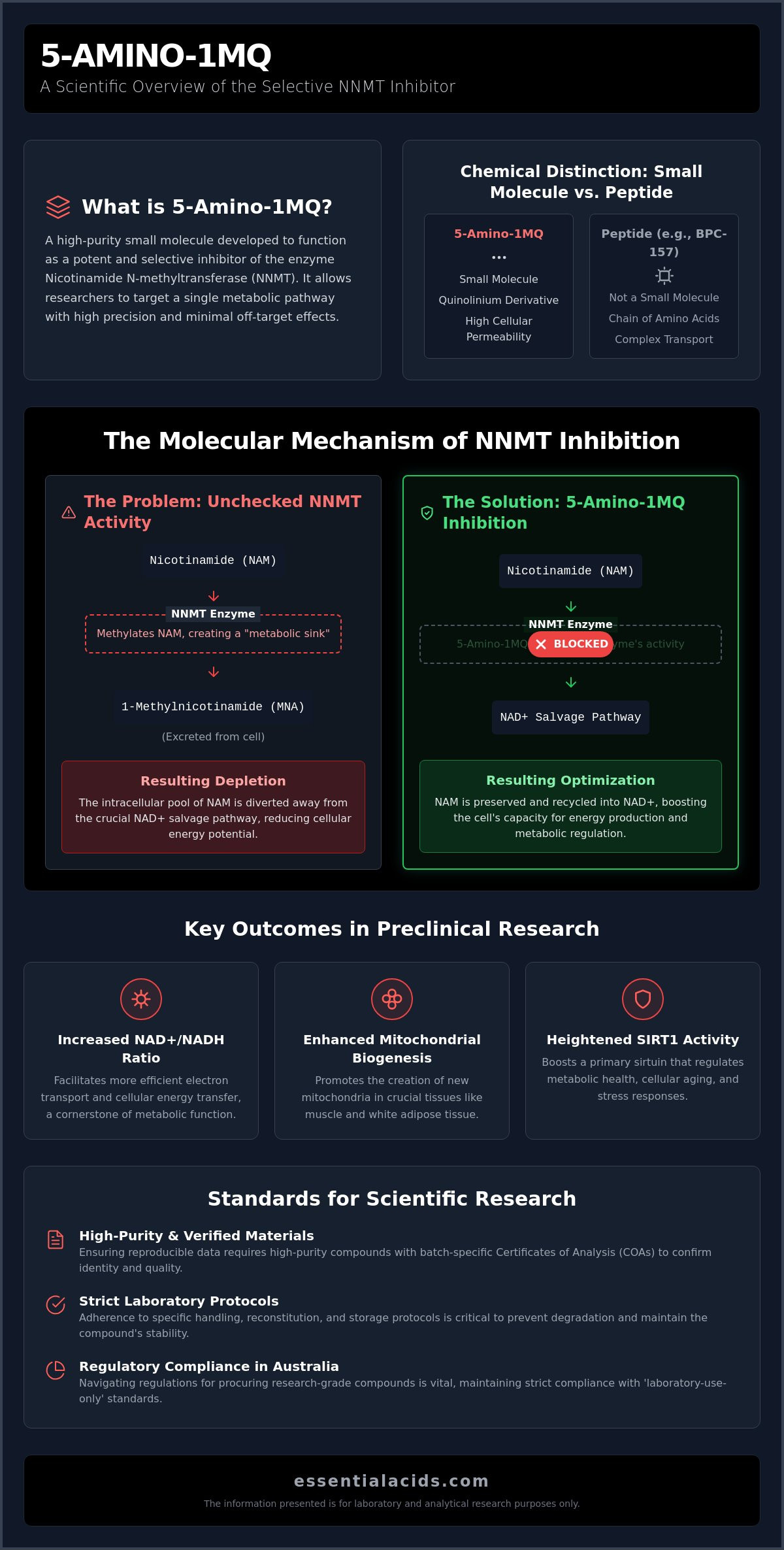
5-Amino-1-methylquinolinium, technically identified as 5 amino 1mq, is a high-purity small molecule developed to function as a potent and selective inhibitor of the cytosolic enzyme Nicotinamide N-methyltransferase (NNMT). It represents a distinct class of research chemicals often utilized in metabolic and cellular ageing studies. Unlike the broad-acting metabolic modulators of the past, this compound is designed for high specificity, allowing researchers to target a single enzymatic pathway with minimal off-target effects. Essential Acids maintains strict adherence to scientific integrity by providing this compound solely for laboratory and analytical research within controlled environments.
Small Molecule vs. Peptide: A Chemical Distinction
A frequent point of confusion in laboratory procurement is the classification of 5 amino 1mq as a peptide. Chemically, it's a quinolinium derivative, not a chain of amino acids like BPC-157. This distinction is critical for experimental design. Small molecules typically possess a lower molecular weight and a more rigid structure than peptides. These properties contribute to high cellular permeability, meaning the compound can often bypass complex transport mechanisms to reach its intracellular target. Additionally, quinolinium derivatives exhibit different stability profiles in common laboratory solvents compared to the delicate amide bonds found in peptides, necessitating specific handling and storage protocols to prevent degradation.
The Role of NNMT in Biological Research
The enzyme Nicotinamide N-methyltransferase (NNMT) is a major regulator of cellular energy homeostasis and methylation potential. It functions by transferring a methyl group from S-adenosylmethionine (SAM) to nicotinamide (NAM), producing 1-methylnicotinamide (MNA). In preclinical research models, elevated levels of NNMT have been observed in tissues associated with metabolic dysfunction, specifically white adipose tissue and certain muscle groups. This upregulation creates a "metabolic sink" that depletes the available pool of SAM and diverts NAM away from the NAD+ salvage pathway. Selective inhibition via 5-Amino-1MQ allows scientists to isolate these variables. By blocking NNMT activity, researchers can investigate the subsequent increase in NAM availability and its impact on mitochondrial biogenesis and energy expenditure. This makes the compound an indispensable probe for studies focusing on adipocyte biology and the reversal of age-related metabolic decline in laboratory subjects.
The Molecular Mechanism: NAD+ Salvage and Metabolic Flexibility
The primary mechanism of 5 amino 1mq involves the strategic blockade of the Nicotinamide N-methyltransferase (NNMT) enzyme. In standard metabolic conditions, NNMT methylates nicotinamide (NAM), converting it into 1-methylnicotinamide (MNA) for excretion. This process effectively removes NAM from the intracellular environment. By inhibiting this specific enzyme, researchers can prevent the degradation of NAM, keeping it available for recycling within the cell. This shift is a critical focal point in research regarding NNMT Inhibition in Obesity and Diabetes, where the goal is to investigate how preserving NAM levels can influence systemic metabolic flexibility.
Intracellular NAD+ Optimization via NNMT Inhibition
Unlike direct precursors such as Nicotinamide Mononucleotide (NMN) or Nicotinamide Riboside (NR), which provide the raw materials for NAD+ synthesis, 5-Amino-1MQ functions as a metabolic gatekeeper. It doesn't add more substrate to the system; instead, it prevents the loss of existing substrates. The NAD+ salvage pathway is the primary metabolic route through which cells regenerate nicotinamide adenine dinucleotide from nicotinamide, ensuring the availability of cofactors necessary for sirtuin activity and oxidative phosphorylation. Researchers investigating bioenergetic consequences often observe several key shifts:
- An increased NAD+/NADH ratio, which facilitates more efficient electron transport.
- Enhanced mitochondrial biogenesis in muscle and adipose tissues.
- Heightened sirtuin-1 (SIRT1) activity, which regulates metabolic health and cellular stress responses.
Methylation Pool Homeostasis
Beyond its impact on NAD+ levels, NNMT inhibition profoundly influences the cellular methylation pool. NNMT is a major consumer of S-adenosylmethionine (SAM), the universal methyl donor. When NNMT is overexpressed, it creates a "methyl sink" that can deplete SAM levels, potentially starving other essential methyltransferases. This competition is a vital area of study for epigenetic regulation and gene expression. While compounds like Semax Peptide are frequently explored for their neurorestorative properties via peptide-specific pathways, 5-Amino-1MQ acts as a metabolic rheostat by shifting the methylation balance back toward DNA and histone methylation. This restoration of SAM availability allows researchers to study the reversal of metabolic dysfunction in diet-induced laboratory models. For those conducting these complex trials, securing high-purity compounds from a supplier like Essential Acids ensures that experimental variables remain controlled and findings are rooted in scientific integrity.
Preclinical Research Applications: Adipose and Muscle Biology
Preclinical investigations into 5 amino 1mq focus primarily on its ability to modulate energy expenditure and tissue composition. Unlike traditional thermogenic agents that often stimulate the central nervous system, this inhibitor targets peripheral tissues to alter metabolic pathways directly. Research in rodent models shows that NNMT inhibition leads to a reduction in white adipose tissue (WAT) mass. This change occurs without a corresponding reduction in caloric intake, suggesting a shift in basal metabolic rate rather than appetite suppression. Scientists use these models to study how cellular energy consumption can be decoupled from dietary input in controlled environments.
Investigating Adiposity in Metabolic Models
A landmark 2017 study from the University of Texas Medical Branch provided critical data on the efficacy of 5-Amino-1MQ in diet-induced obesity (DIO) models. In these trials, mice treated with the compound exhibited a significant reduction in body weight and fat mass over an 11 day period despite maintaining a high-fat diet. The researchers observed that the reduction in fat mass was specifically driven by a decrease in adipocyte size, not cell number. This reduction in adipocyte hypertrophy is a vital research endpoint; smaller adipocytes are typically associated with improved glucose tolerance and enhanced insulin sensitivity. These findings allow researchers to explore the compound's potential in reversing the metabolic markers of obesity without the variables of dietary restriction.
Neuromuscular and Longevity Research Endpoints
The impact of NNMT inhibition extends beyond adipose tissue into skeletal muscle biology. Observations in rodent models suggest that 5-Amino-1MQ may facilitate muscle fiber hypertrophy and improve contractile function. This has led to increased interest in investigating age-related muscle decline, commonly known as sarcopenia. By increasing the NAD+/NADH ratio within muscle cells, the compound appears to enhance mitochondrial biogenesis and reduce cellular senescence. These mechanisms are central to longevity research, as they target the root causes of cellular ageing rather than superficial symptoms.
The intersection of metabolic health and systemic aging is a growing field of inquiry. Researchers often look at how these internal metabolic shifts manifest in external tissues. For example, while 5-Amino-1MQ targets internal enzymatic pathways, its effects on cellular health often complement studies on peptides for skin which focus on extracellular matrix integrity. Investigating these dual pathways provides a more holistic understanding of systemic ageing. For the Australian scientific community, maintaining the integrity of these studies requires high-purity material that meets the rigorous standards of laboratory research.
Laboratory Standards: Purity, Reconstitution, and Storage
Maintaining scientific integrity in metabolic research requires a disciplined approach to material handling. The efficacy of 5 amino 1mq as an NNMT inhibitor is contingent upon the absence of synthesis byproducts that could interfere with cellular pathways. High-purity material, specifically those verified at ≥98% through analytical testing, is the industry standard for ensuring that observed biological responses are attributable solely to the compound itself. Using materials with lower purity thresholds introduces significant risks of off-target effects and data inconsistency.
Handling and Reconstitution Guidelines
While 5-Amino-1MQ is a robust quinolinium derivative, its solubility varies based on the chosen laboratory buffer. Researchers typically utilize Dimethyl Sulfoxide (DMSO) for high-concentration stock solutions, though sterile water or saline may be appropriate for specific in vitro applications. It's essential to avoid repeated freeze-thaw cycles, as these can induce molecular stress and lead to gradual degradation of the compound's structure. For long-term stability, the lyophilized powder should be stored at -20°C, while reconstituted solutions are best maintained at 2-8°C and utilized within a 30 to 45 day window.
When buying research peptides in Australia or related small molecules, investigators must prioritize suppliers that provide clear, technically sound reconstitution parameters. Proper handling ensures that the compound remains biologically active throughout the duration of the study, preventing the loss of valuable research time and resources.
Analytical Quality Control
Batch-specific Certificates of Analysis (COA) are non-negotiable components of laboratory procurement. A COA provides the necessary transparency by detailing the results of Mass Spectrometry and HPLC testing. Mass Spectrometry confirms the molecular weight and identity of the compound, helping to identify any residual synthesis byproducts or impurities that may have survived the purification process. High-Performance Liquid Chromatography (HPLC) serves as the definitive analytical benchmark for verifying that a compound's purity aligns with the stringent requirements of metabolic research.
Relying on unverified materials introduces unnecessary variables that can compromise the reproducibility of scientific findings in metabolic studies. Researchers can secure high-purity, batch-verified 5-Amino-1MQ for laboratory use to maintain the highest standards of analytical accuracy and ensure that their research outcomes are rooted in precision.
Procuring 5-Amino-1MQ for Scientific Research in Australia
Procurement of high-purity research compounds in Australia requires a partner that understands the gravity of laboratory investigations. Essential Acids operates with a commitment to "Making better, normal," prioritizing the provision of 5 amino 1mq that meets rigorous analytical standards. As the Australian Therapeutic Goods Administration (TGA) has elevated unapproved peptide products to an enforcement priority as of June 2026, the distinction between research-grade materials and consumer-grade offerings is paramount. We maintain a strictly objective approach, ensuring all compounds are handled within a framework of regulatory compliance and scientific integrity.
The Essential Acids Quality Standard
Our supply chain is optimized to deliver compounds that meet the specific needs of the Australian scientific community. Every batch of 5-Amino-1MQ undergoes rigorous 3rd-party testing protocols, including High-Performance Liquid Chromatography (HPLC) and Mass Spectrometry. These tests aren't merely internal checks; they provide the analytical foundation for every experiment. Researchers can access batch-specific Certificates of Analysis (COA) to verify purity levels, typically exceeding 98%. This transparency allows investigators to account for every molecular variable in their metabolic studies.
Professional support is provided to ensure researchers have the technical data required for precise experimental design. Whether you're investigating white adipose tissue mass or sirtuin activity, our team facilitates access to the necessary stability and reconstitution data. Distribution is managed through a secure, national network designed for time-sensitive research requirements. We ensure that materials are delivered in conditions that preserve their structural integrity, minimizing the risk of degradation during transit.
Advancing Metabolic Research
The study of NNMT inhibition is a cornerstone of modern cellular health research. By providing reliable molecular tools, we support Australian scientists in their efforts to map the future of metabolic flexibility and cellular ageing. 5-Amino-1MQ remains a critical probe for understanding how enzymatic pathways influence systemic health in preclinical models. We don't engage in aggressive sales tactics; instead, we let the analytical quality of our compounds speak for itself. This disciplined focus on quality assurance ensures that your laboratory endpoints remain valid and reproducible.
Maintaining these materials within controlled environments is essential for both regulatory compliance and research accuracy. Essential Acids serves as a rigorous gatekeeper, ensuring that these small molecules are utilized exclusively for in-vitro and laboratory research. Investigators can explore 5-Amino-1MQ for research use at Essential Acids to secure batch-verified material for their upcoming metabolic trials.
Advancing Metabolic Research through Analytical Precision
The investigation of 5 amino 1mq represents a significant shift in metabolic research, moving beyond broad interventions to target specific enzymatic pathways with high selectivity. By inhibiting NNMT, researchers can investigate the preservation of intracellular NAD+ and the restoration of methylation homeostasis without the variables introduced by exogenous precursors. These mechanisms are central to advancing the current understanding of adipose tissue biology and skeletal muscle hypertrophy in preclinical models. Maintaining the integrity of these studies requires a commitment to analytical excellence and strict adherence to research-use-only protocols.
Essential Acids supports the Australian scientific community by providing high-purity compounds backed by batch-specific HPLC and Mass Spectrometry reports. Our national distribution network ensures that your laboratory materials are delivered with the documentation necessary to verify scientific integrity and ensure reproducibility. As we continue the pursuit of "Making better, normal," the precision of your molecular tools remains our primary focus. We invite you to secure high-purity 5-Amino-1MQ for your research at Essential Acids and maintain the highest standards in your metabolic investigations.
Frequently Asked Questions
What is the primary mechanism of 5-Amino-1MQ in research?
5-Amino-1MQ functions as a selective, small-molecule inhibitor of the Nicotinamide N-methyltransferase (NNMT) enzyme. By blocking this specific enzyme, the compound prevents the methylation of nicotinamide into 1-methylnicotinamide, which preserves the intracellular pool of nicotinamide for the NAD+ salvage pathway. This mechanism is primarily utilized in laboratory research focusing on metabolic energy expenditure and mitochondrial biogenesis in cellular models.
Is 5-Amino-1MQ a peptide or a small molecule?
5-Amino-1MQ is classified as a small molecule, specifically a quinolinium derivative, rather than a peptide. Unlike peptides, which consist of amino acid chains linked by amide bonds, this compound possesses a lower molecular weight and a rigid chemical structure that facilitates high cellular permeability. This classification is vital for determining appropriate laboratory handling and experimental design in metabolic studies.
How should 5-Amino-1MQ be reconstituted for laboratory use?
Reconstitution should be performed using an appropriate laboratory solvent such as Dimethyl Sulfoxide (DMSO) for high-concentration stock solutions or sterile water for specific in vitro applications. The choice of solvent depends on the required concentration and the specific parameters of the biological assay. It's critical to ensure complete dissolution before initiating research protocols to maintain the accuracy of the experimental dosage.
What are the storage requirements for 5-Amino-1MQ powder?
Lyophilized 5 amino 1mq powder should be stored at -20°C for long-term stability, though it remains stable at room temperature for short durations when protected from light and moisture. Once the compound is reconstituted, the solution should be refrigerated at 2-8°C and utilized within a 30 to 45 day window. Proper storage is essential to prevent molecular degradation and ensure the reproducibility of scientific data.
Can 5-Amino-1MQ be used for human consumption?
No, 5-Amino-1MQ is strictly for research-use only and is not approved for human or veterinary consumption. In Australia, the Therapeutic Goods Administration (TGA) has not evaluated this compound for safety, quality, or efficacy in humans. Any use outside of a controlled laboratory environment is prohibited and contradicts the core values of scientific integrity that define the supply of research-grade materials.
What analytical reports should I expect with research-grade 5-Amino-1MQ?
High-integrity research materials must be accompanied by batch-specific HPLC (High-Performance Liquid Chromatography) and Mass Spectrometry (MS) reports. These documents, consolidated in a Certificate of Analysis (COA), verify the chemical identity and ensure a purity level of ≥98%. Such transparency is required to confirm that experimental results aren't compromised by synthesis byproducts or residual impurities from the manufacturing process.
How does 5-Amino-1MQ affect NAD+ levels in preclinical studies?
In preclinical research, 5 amino 1mq increases cellular NAD+ levels by inhibiting the primary degradation pathway of nicotinamide. This enzymatic blockade prevents the diversion of NAM toward excretion, allowing it to be recycled into NAD+ via the salvage pathway. This process effectively increases the NAD+/NADH ratio, which is a primary research endpoint for studies investigating metabolic flexibility and cellular ageing.
What is the difference between 5-Amino-1MQ and direct NNMT inhibitors?
5-Amino-1MQ is itself a direct small-molecule inhibitor of the NNMT enzyme, distinguishing it from indirect metabolic modulators like NAD+ precursors. While precursors such as NMN or NR add substrate to the system, 5-Amino-1MQ acts as a gatekeeper to prevent the loss of existing substrates. This distinction allows researchers to isolate the specific role of NNMT activity in metabolic dysfunction and cellular energy homeostasis.
Legal Disclaimer
All products sold on this website are intended exclusively for laboratory research purposes and not for human or veterinary use, diagnosis, cure, treatment, or prevention of any disease or condition. None of the statements on this site have been reviewed or evaluated by the U.S. Food and Drug Administration (FDA) or comparable regulatory authorities. Purchasing or using these products for any unintended purpose, including human consumption, may violate federal or local laws and poses safety risks.