

The validity of a regenerative study is only as reliable as the analytical certificate accompanying the compound. In a landscape where BPC-157 accounts for nearly 8% of research peptide demand, the absence of official USP or NF monographs creates a significant challenge for maintaining scientific integrity. Researchers often find that bpc 157 5mg vials vary in purity between suppliers, especially when batch-specific HPLC and MS documentation isn't provided. You likely recognize the difficulty of distinguishing between legitimate research-grade chemicals and products that lack the necessary metabolic profiling for successful experimental replication.
This technical analysis clarifies the molecular architecture and cellular mechanisms of BPC-157 5mg to ensure your laboratory protocols remain precise. We'll examine the specific signaling pathways involved in tissue repair and the rigorous procurement standards required for the 2026 research cycle. We also provide a detailed overview of the current regulatory environment for Australian laboratories, including the global implications of the April 2026 FDA updates and the upcoming July 2026 PCAC review. This preview covers everything from molecular signaling to the strict research-use only verification protocols needed for high-purity chemical procurement.
Key Takeaways
- Define the precise 15-amino acid sequence and its origin from human gastric juice protein to establish a baseline for molecular signaling research.
- Analyze the cellular mechanisms of bpc 157 5mg, specifically its role in the upregulation of Vascular Endothelial Growth Factor (VEGF) and the VEGFR2 signaling pathway.
- Identify critical laboratory handling protocols, such as maintaining -20°C storage for lyophilized vials and selecting appropriate diluents for reconstitution.
- Verify chemical integrity through rigorous analytical documentation, prioritizing procurement from sources that provide batch-specific HPLC and Mass Spectrometry data.
- Explore current research directions in musculoskeletal and gastrointestinal modeling to enhance the experimental validity of in vitro and in vivo studies.
Molecular Architecture of BPC-157: A Synthetic Pentadecapeptide Review
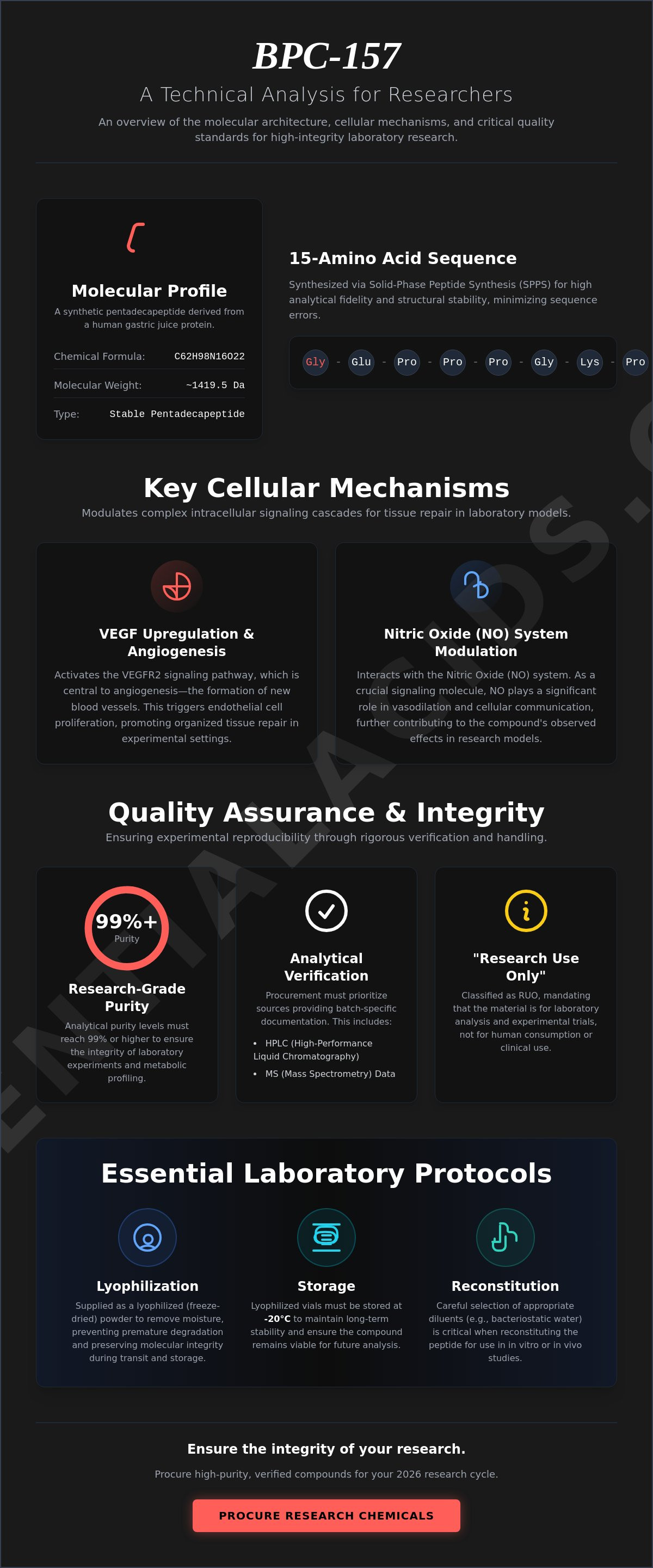
BPC-157 is a synthetic pentadecapeptide composed of 15 amino acids, specifically engineered for high-integrity laboratory research. Its molecular architecture is derived from a protective protein found in human gastric juice, though the version utilized in contemporary biochemistry is entirely synthetic. The chemical formula for this compound is C62H98N16O22, with a molecular weight of approximately 1419.5 Da. Within the specialized field of synthetic chemistry, it's often identified by the designation "Be-Poly-Compound." This name reflects its status as a stable, sequence-derived analog of the larger endogenous body protection compounds. For researchers utilizing a bpc 157 5mg vial, understanding this molecular blueprint is the first step toward ensuring experimental reproducibility and scientific integrity.
This compound's resilience is a primary focus of analytical profiling. Unlike many naturally occurring peptides that degrade rapidly when exposed to enzymatic activity, this synthetic variant is designed for enhanced stability. For a detailed BPC-157 Overview, researchers can consult foundational literature regarding its initial discovery and subsequent molecular characterization. This structural robustness allows for more consistent observations during longitudinal in vitro studies.
The Sequence and Synthesis of BPC-157
The primary sequence of BPC-157 is Gly-Glu-Pro-Pro-Pro-Gly-Lys-Pro-Ala-Asp-Asp-Ala-Gly-Leu-Val. This specific arrangement is produced through Solid-Phase Peptide Synthesis (SPPS), a method that allows for high-precision assembly of the peptide chain. By utilizing a solid resin support, chemists can wash away excess reagents after each coupling step. This minimizes the risk of truncated sequences or amino acid deletions. The resulting bpc 157 5mg vial contains a compound with high analytical fidelity, which is essential for mapping specific metabolic signaling pathways. This synthetic process ensures that the vials maintain a level of structural stability that often exceeds that of naturally occurring gastric proteins, making it a reliable tool for musculoskeletal and gastrointestinal modeling.
Research Grade vs. Pharmaceutical Grade Distinctions
In Australia, the distinction between research-grade chemicals and pharmaceutical-grade products is defined by strict regulatory boundaries. Compounds like BPC-157 are classified as "Research Use Only" (RUO). This classification mandates that the material is intended for laboratory analysis and experimental trials rather than human consumption or clinical application. To uphold the gravity of laboratory research, analytical purity levels must reach 99% or higher, as verified by batch-specific documentation. Lyophilization, or freeze-drying, is used to preserve this molecular integrity. This process removes moisture from the peptide, creating a stable powder that prevents premature degradation during transit. Once the 5mg vial is received, maintaining this integrity requires adherence to strict storage protocols, typically involving temperatures of -20°C to ensure the compound remains viable for future analysis.
Cellular Mechanisms and Signaling Pathways in Laboratory Models
Experimental observations of BPC-157 focus heavily on its ability to modulate complex intracellular signaling cascades. Analyzing the metabolic effects of a bpc 157 5mg vial requires a detailed understanding of how this peptide interacts with growth factor receptors and the extracellular matrix. The primary mechanism identified in current literature, such as the Molecular Mechanisms of BPC-157, involves the consistent upregulation of Vascular Endothelial Growth Factor (VEGF). This process is central to the initiation of angiogenesis, which is the formation of new blood vessels from pre-existing ones. By activating the VEGFR2 signaling pathway, the peptide triggers a series of downstream events that lead to endothelial cell proliferation and organized tissue repair.
Modulation of the nitric oxide (NO) system is another critical pathway observed in laboratory settings. Nitric oxide acts as a signaling molecule that regulates vascular tone and cellular defense mechanisms. In various tissue repair models, the peptide appears to balance NO levels, facilitating a stable environment for cellular regeneration. This interaction extends to growth factor receptors beyond VEGF, including those involved in fibroblast activation. Fibroblasts are essential for collagen synthesis, and their activation is a prerequisite for the structural integrity of connective tissues in musculoskeletal models. Researchers can source high-integrity bpc 157 5mg compounds to ensure these specific signaling pathways are accurately mapped during experimental trials.
Angiogenesis and Vascular Signaling
In vitro studies demonstrate that the peptide significantly influences cellular migration through the FAK-paxillin signaling pathway. This pathway is vital for the movement of endothelial cells toward sites of injury. Experimental observations in ischemic models frequently show increased capillary density, suggesting that the compound promotes a robust vascular response. These effects aren't limited to simple cell growth; they involve the precise coordination of signaling molecules that ensure new vessels are functional and structurally sound. This level of vascular signaling is a primary focus for laboratories investigating ischemic recovery and systemic circulation.
Cytoprotective Properties and Molecular Defense
The peptide's cytoprotective influence is often linked to its interaction with early growth response 1 (EGR-1) gene expression. This gene acts as a master regulator for many cytokines and growth factors involved in the inflammatory response. In neurological research, the "brain-gut axis" signaling pathway is explored to understand how gastric-derived peptides might influence neuroprotective outcomes. Systemic research models also highlight a modulation of anti-inflammatory signaling, which helps maintain mucosal integrity in gastrointestinal studies. By focusing on these molecular defense mechanisms, scientists can better understand how the compound stabilizes biological systems under stress without the need for traditional pharmaceutical interventions.
Current Directions in In Vitro and In Vivo Research
The transition from mapping intracellular signaling to applying these findings in complex biological models is the current frontier of peptide biochemistry. Researchers utilizing bpc 157 5mg vials focus on validating the compound's influence across diverse tissue types, ranging from dense connective structures to sensitive mucosal linings. Precision in these trials is paramount, as even minor variations in peptide purity can compromise the validity of a longitudinal study. This necessity for chemical integrity is underscored by the FDA Safety Risks for BPC-157, which highlights the potential for peptide-related impurities to interfere with active pharmaceutical ingredient characterization. For Australian laboratories, maintaining these high analytical standards is a prerequisite for successful experimental replication.
Beyond musculoskeletal and gastric models, dermatological research explore the compound's impact on accelerated wound closure and skin graft viability. These studies often measure the rate of epithelialization and the structural strength of newly formed tissue. In neurological settings, the research focus shifts to neuroprotective potential within traumatic brain injury (TBI) models. Scientists examine how the peptide might influence secondary injury cascades, though these investigations remain strictly within the preclinical phase. Each of these research directions requires a stable, high-purity compound to ensure that observed metabolic shifts are attributable solely to the peptide sequence.
Soft Tissue and Tendon Repair Modeling
Musculoskeletal research frequently employs Achilles tendon rupture models to analyze fibroblast outgrowths. In these laboratory trials, the primary metric of interest is the synthesis of collagen type I, which is essential for the tensile strength of ligaments and tendons. Comparative studies often evaluate the performance of BPC-157 alongside TB-500 to determine if their distinct molecular mechanisms offer synergistic effects in tissue regeneration modeling. While BPC-157 is noted for its interaction with growth factor receptors, TB-500 is typically analyzed for its role in actin sequestration. Understanding these differences is critical for researchers designing protocols for tendon-to-bone healing and ligament repair studies.
Gastrointestinal and Mucosal Integrity Studies
Gastrointestinal research remains a cornerstone of the peptide's history, with current studies modeling the resolution of NSAID-induced gastric lesions. These experiments often examine how the compound influences the maintenance of the gut-blood barrier during toxic trauma or systemic stress. In surgical research, the impact of the peptide on intestinal anastomosis healing is a frequent subject of in vivo trials. These studies measure the bursting pressure and hydroxyproline content of the healed tissue to quantify the integrity of the repair. By focusing on these specific mucosal defense mechanisms, laboratories can better understand the peptide's role in stabilizing the gastrointestinal environment in inflammatory bowel models.
While laboratory studies focus on molecular mechanisms for gut health, the practical application of nutritional support is readily available through services like Eat Better Meals, which offers fresh, chef-prepared meals delivered directly to your door.
Quality Assurance: Verifying Peptide Integrity and Purity
Analytical verification is the only method to ensure that a bpc 157 5mg vial meets the stringent requirements of a controlled laboratory environment. Without rigorous testing, researchers risk introducing variables that can skew metabolic data or lead to failed experimental replication. High-Performance Liquid Chromatography (HPLC) serves as the primary tool for determining chemical purity. This process involves passing the peptide through a chromatographic column under high pressure, which separates the primary compound from any residual reagents or synthesis byproducts. While many suppliers claim high purity, only a detailed HPLC report provides the empirical evidence necessary to confirm these assertions.
Mass Spectrometry (MS) complements HPLC by verifying the molecular identity of the compound. While HPLC confirms the absence of contaminants, MS ensures the substance is indeed BPC-157 by measuring its mass-to-charge ratio. For a bpc 157 5mg sample, the mass spectrum should align precisely with the theoretical molecular weight of 1419.5 Da. Discrepancies in this value often indicate the presence of truncated sequences or amino acid deletions. Recognizing these synthesis byproducts is essential, as even trace amounts of incorrect sequences can interfere with cellular signaling pathways and compromise the integrity of the research.
How to Read an HPLC Report
Interpreting an HPLC chromatogram requires an analysis of the primary peak and the baseline noise. The primary peak represents the target peptide, and its retention time indicates how long the compound remained in the column before detection. A single, sharp, and symmetrical peak is the hallmark of 99%+ purity. Technicians calculate the purity percentage by measuring the Area Under the Curve (AUC) for the primary peak relative to the total area of all detected peaks. If the chromatogram shows multiple secondary peaks, it suggests the presence of impurities that could destabilize the experimental model.
Batch-Specific Documentation Standards
Scientific integrity depends on the use of batch-specific documentation rather than generic stock reports. A Certificate of Analysis (CoA) must correspond directly to the lot number on the vial to be considered valid. This documentation should include the HPLC chromatogram, the Mass Spectrometry report, and a clear statement of the purity percentage. Australian laboratories must also verify that third-party testing facilities hold the necessary credentials to ensure the data's accuracy. This rigorous approach reflects a deep commitment to Scientific Integrity, ensuring that every compound is fit for its intended analytical purpose. Researchers requiring verified compounds can procure analytical grade bpc 157 5mg to ensure experimental consistency across all study phases.
Laboratory Handling: Reconstitution and Stability Protocols
The transition of BPC-157 from its lyophilized state to an aqueous solution represents a critical phase where molecular integrity is most vulnerable. While the dry powder is relatively robust, the reconstituted peptide is highly sensitive to environmental stressors. For long-term stability, lyophilized bpc 157 5mg vials must be stored at -20°C. Short-term storage at 4°C is acceptable for vials intended for immediate use within a 24 to 48-hour window, but extended exposure to even refrigerated temperatures will eventually lead to primary sequence degradation. Maintaining a consistent cold chain is essential for preventing the hydrolysis of the peptide bonds, which would otherwise render the compound inert for analytical purposes.
Selecting the appropriate diluent is the next foundational step in the laboratory protocol. Bacteriostatic water, which contains 0.9% benzyl alcohol, is the standard choice for multi-use research vials because it inhibits microbial growth over a 28-day period. Sterile saline (0.9% NaCl) is an alternative for single-use applications, though it lacks the preservative qualities necessary for longitudinal studies. To minimize shear stress during reconstitution, the diluent should be introduced slowly by aiming the needle toward the inner wall of the glass vial. A direct jet of liquid onto the lyophilized cake can cause mechanical denaturation of the delicate 15-amino acid chain. Once the diluent is added, the vial should be gently swirled rather than shaken until the solution is clear and free of visible particulates.
Calculating Concentration Ratios for Experiments
Precision in laboratory mathematics is a prerequisite for achieving reproducible data in animal models or in vitro trials. To achieve a standard concentration of 2.5mg/mL in a bpc 157 5mg vial, exactly 2.0mL of diluent must be added. The formula C = m/V (where C is concentration, m is mass, and V is volume) serves as the baseline for all calculations. For experiments requiring high-precision micro-dosing, researchers must use calibrated micropipettes to ensure volumetric accuracy. Errors in these initial dilution steps can lead to significant discrepancies in metabolic data, potentially obscuring the signaling pathways identified in the previous sections of this analysis.
Environmental Sensitivity of the BPC-157 Molecule
The stability of the pentadecapeptide is heavily influenced by its immediate environment post-reconstitution. UV exposure is a known catalyst for peptide bond cleavage; therefore, vials should be stored in opaque containers or dark environments to prevent photodegradation. Mechanical agitation is another significant risk factor. While "swirling" facilitates gentle dissolution, "shaking" introduces air bubbles and surface tension changes that can lead to protein aggregation and loss of biological activity. Finally, temperature fluctuations must be avoided. Repeated freeze-thaw cycles after the initial reconstitution are discouraged, as the resulting ice crystal formation can physically rupture the peptide chains, compromising the scientific integrity of the compound.
Advancing Laboratory Standards for Pentadecapeptide Research
Ensuring the validity of regenerative models requires a disciplined adherence to analytical standards and handling protocols. The 2026 research landscape demands more than just sequence identification; it necessitates a comprehensive understanding of the VEGF and VEGFR2 signaling pathways alongside rigorous purity verification. By prioritizing batch-specific HPLC and Mass Spectrometry data, laboratories can eliminate the variables associated with synthesis byproducts and contaminants. Proper reconstitution and storage at -20°C further safeguard the molecular integrity of the compound, ensuring that metabolic observations remain consistent across every experimental phase.
To ensure these complex protocols and analytical data are easily accessible to all lab personnel, you might explore Plastic Spiral Binding Coils to produce high-quality, durable manuals for your research facility.
Scientific integrity is maintained through the procurement of verified chemicals that meet 99% purity thresholds. For researchers focused on musculoskeletal or gastrointestinal modeling, the quality of the starting material is the primary determinant of success. You can Procure High-Purity BPC-157 5mg for Your Research to ensure your laboratory protocols are supported by batch-specific HPLC/MS analysis and high-integrity standards. These compounds are strictly intended for laboratory research use to support the advancement of biochemical knowledge. Maintaining these rigorous standards will ensure your study contributes valuable data to the scientific community.
Frequently Asked Questions
What is the exact molecular weight of BPC-157 5mg?
The exact molecular weight of BPC-157 is approximately 1419.5 Daltons. This value is calculated based on its chemical formula, C62H98N16O22, and is a critical benchmark during Mass Spectrometry analysis. Any deviation from this weight in laboratory testing suggests the presence of impurities or truncated peptide sequences that may compromise experimental validity.
Can BPC-157 5mg be used for human consumption?
No, BPC-157 is strictly for research-use only and is not intended for human consumption or clinical application. It is not an FDA-approved drug, and it cannot be legally marketed as a dietary supplement or pharmaceutical. All laboratory protocols must adhere to these safety boundaries to maintain regulatory compliance and professional integrity.
How should I store lyophilized BPC-157 for maximum stability?
Lyophilized bpc 157 5mg vials must be stored at -20°C for long-term stability and to prevent primary sequence degradation. While the compound remains stable at room temperature for short durations during transit, extended exposure to heat will lead to hydrolysis. Once the vial is received, it should be transferred to a deep-freeze environment immediately to preserve its analytical integrity.
What is the difference between BPC-157 and TB-500 in research models?
BPC-157 is a 15-amino acid pentadecapeptide that primarily influences the VEGF signaling pathway, while TB-500 is a 43-amino acid peptide that modulates actin sequestration. In laboratory research, BPC-157 is frequently analyzed for its stability in musculoskeletal and gastric models. TB-500 is more commonly studied for its role in cellular migration and systemic tissue repair cascades.
What diluent is recommended for BPC-157 5mg reconstitution?
Bacteriostatic water is the recommended diluent for bpc 157 5mg because it contains 0.9% benzyl alcohol, which inhibits microbial growth over a 28-day period. Sterile saline is an acceptable alternative for single-use applications, but it lacks the necessary preservatives for multi-dose experiments. The choice of diluent is a primary factor in maintaining the stability of the peptide solution during longitudinal trials.
How do I verify the purity of my BPC-157 research vial?
Purity is verified by reviewing the batch-specific HPLC and Mass Spectrometry documentation provided by the supplier. A high-integrity vial should show a purity level of 99% or higher, represented by a single, sharp peak on the HPLC chromatogram. Researchers must ensure the lot number on the analytical report matches the lot number on the physical vial to confirm chemical identity.
What is the shelf life of BPC-157 after it has been reconstituted?
The shelf life of reconstituted BPC-157 is limited to approximately 7 to 28 days when stored at 4°C. The specific duration depends on the diluent used; bacteriostatic water allows for the longest viable window. It's important to avoid freezing the solution after reconstitution, as ice crystal formation can physically rupture the peptide bonds and render the compound inert.
Why is BPC-157 referred to as a stable gastric pentadecapeptide?
BPC-157 is called a stable gastric pentadecapeptide because its sequence is derived from a protective protein found in human gastric juice. This synthetic 15-amino acid chain is engineered to maintain its structural integrity in environments that would typically degrade other peptides. This resilience makes it a reliable subject for research involving inflammatory stress and mucosal integrity models.
Legal Disclaimer
All products sold on this website are intended exclusively for laboratory research purposes and not for human or veterinary use, diagnosis, cure, treatment, or prevention of any disease or condition. None of the statements on this site have been reviewed or evaluated by the U.S. Food and Drug Administration (FDA) or comparable regulatory authorities. Purchasing or using these products for any unintended purpose, including human consumption, may violate federal or local laws and poses safety risks.