

The distinction between a nutritional supplement and a high-purity research compound isn't just a matter of marketing; it's a fundamental divergence in molecular integrity and analytical verification. You've likely found that navigating the gray area between consumer-grade products and laboratory-verified materials is increasingly difficult, especially when batch-specific purity data remains elusive. This Complete guide to Essential Acids establishes a clinical framework for understanding the biochemical hierarchy, moving from foundational amino acids to advanced synthetic peptides. We're committed to the principle of "Making better, normal" through rigorous scientific transparency and a strict adherence to research-use only standards.
Researchers require absolute clarity to maintain scientific integrity in an evolving regulatory environment. This analysis clarifies the transition from simple molecular structures to complex signaling compounds like 5-Amino-1MQ, which is a small-molecule inhibitor rather than a peptide. We'll examine the impact of the ISO 16958:2026 standards and the 2026 FDA reclassifications of compounds like BPC-157 and TB-500. By the end of this guide, you'll possess a comprehensive protocol for verifying research-grade materials and a technical understanding of the 2026 peptide synthesis landscape. This ensures your laboratory operations remain both compliant and precise.
Key Takeaways
- Understand the structural progression from monomeric amino acids to complex peptide chains to better categorize high-purity research materials.
- Explore the molecular pathways through which synthetic peptides and metabolic inhibitors influence cellular signaling and homeostasis.
- This Complete guide to Essential Acids defines the analytical standards necessary for verifying the purity and integrity of batch-specific laboratory compounds.
- Learn the critical distinctions between research-grade and pharmaceutical-grade materials to ensure full regulatory and laboratory compliance.
- Gain technical insight into the strategic selection of advanced compounds like 5-Amino-1MQ for specialized studies in metabolic health and cellular ageing.
The Biochemical Hierarchy: From Amino Acids to Synthetic Peptides
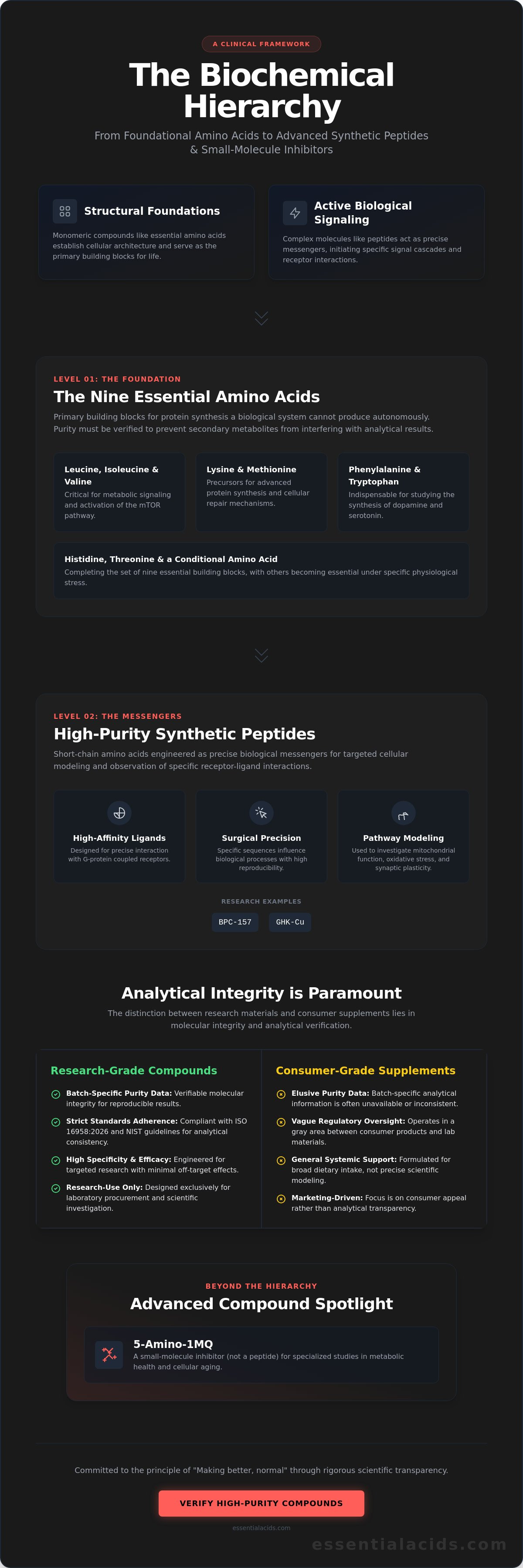
The biochemical hierarchy begins with the identification of compounds a biological system cannot synthesize autonomously. These Essential amino acids must be sourced exogenously to maintain metabolic integrity. While traditional literature focuses on dietary intake, this Complete guide to Essential Acids shifts the focus toward the analytical verification of these compounds in a research environment. The transition from monomeric amino acids to complex peptide chains represents a move from structural foundations to active biological signaling. Molecules of this type establish the architecture of cellular membranes and facilitate neurotransmission through precise chemical gradients.
Distinguishing between conditional essentiality and synthetic analogs is vital for laboratory accuracy. Conditional compounds may become essential under specific physiological stress. Synthetic research analogs are engineered to mimic or enhance these pathways with higher specificity. This precision separates high-purity research materials from standard nutritional supplements. Researchers must account for these differences when designing protocols for metabolic or neurological studies. High-integrity data relies on the use of verified compounds that meet strict research-use only standards.
The Nine Essential Amino Acids
Nine specific amino acids serve as the primary building blocks for protein-based life. Leucine, Isoleucine, and Valine are critical for metabolic signaling, particularly in the activation of the mTOR pathway. While these are foundational to research, they are also common in dietary supplements; for instance, Fantastic Nutrition provides insights into how these aminos function in fitness contexts. Lysine and Methionine act as precursors for advanced protein synthesis and cellular repair mechanisms. In neurochemical research, Phenylalanine and Tryptophan are indispensable for studying the synthesis of dopamine and serotonin. Each compound's batch-specific purity must be verified to ensure that secondary metabolites don't interfere with analytical results. These foundations are required for any study involving cellular ageing or metabolic optimization.
Peptides: The Next Frontier of Essential Research
Peptides are short-chain amino acids that act as precise biological messengers rather than simple structural components. This shift from general systemic support to targeted cellular modeling defines the modern research landscape. High-purity peptides are the preferred medium for analytical studies because they allow for the observation of specific receptor-ligand interactions. Compounds such as BPC-157 or GHK-Cu demonstrate how specific sequences can influence biological processes with surgical precision. We prioritize the integrity of these sequences to support the goal of making better, normal through rigorous scientific integrity and protective laboratory policies. The precision of the laboratory remains the final authority on compound efficacy.
Molecular Mechanisms: How Peptides Influence Cellular Signaling
Peptides function as high-affinity ligands that initiate complex signal transduction cascades upon binding to specific cellular receptors. Unlike the foundational amino acids discussed in the hierarchy of biological building blocks, these synthetic analogs are designed for precise interaction with G-protein coupled receptors or receptor tyrosine kinases. This interaction is a central focus of this Complete guide to Essential Acids; it allows researchers to model specific biological outcomes with high reproducibility. Maintaining the integrity of these interactions requires compounds that align with the NIST Standard Reference Material 2389a for analytical consistency. By modulating these pathways, scientists can observe changes in cellular homeostasis and metabolic flux.
Synthetic neuropeptides expand this scope into neurological pathway modeling. These compounds are studied for their ability to influence synaptic plasticity and neuroprotective mechanisms. In research concerning cellular ageing, these molecular messengers are used to investigate the preservation of mitochondrial function and the regulation of oxidative stress. Such research requires materials that possess verified molecular weights and sequence accuracy. High-purity compounds ensure that the observed signaling events aren't skewed by contaminants or degraded sequences.
Metabolic Signaling and NNMT Inhibition
Nicotinamide N-methyltransferase (NNMT) is a cytosolic enzyme that regulates cellular energy metabolism by methylating nicotinamide. It's a primary target in research regarding metabolic disorders and cellular ageing. 5-Amino-1MQ serves as a potent, small-molecule inhibitor of NNMT. Research data suggests that inhibiting this enzyme facilitates increased intracellular NAD+ levels and promotes muscle cell proliferation. Studies also focus on its role in adipocyte regulation, specifically how reducing NNMT activity can influence energy expenditure within white adipose tissue. Scientists investigating these pathways often source analytical-grade compounds to maintain the precision of their metabolic models.
Tissue Repair and Regenerative Modeling
Regenerative research focuses on compounds that can accelerate the reconstruction of damaged biological structures. Gastric Pentadecapeptide, known as BPC-157, is frequently analyzed for its angiogenic and cytoprotective properties. It appears to modulate the expression of vascular endothelial growth factor (VEGF), which is a key driver of new blood vessel formation. BPC-157 is a 15-amino acid sequence derived from human gastric juice for research use. Analytical modeling shows that such sequences can influence the migration of fibroblasts to injury sites. This targeted recruitment is essential for studying the repair of tendons, ligaments, and skeletal muscle. The commitment to scientific integrity requires that these sequences are batch-verified for research use only applications.
Analytical Integrity: Verifying High-Purity Research Compounds
Scientific integrity relies on the objective verification of molecular compounds. In this Complete guide to Essential Acids, we emphasize that "quiet authority" is earned through the provision of transparent, batch-specific analytical data. Marketing claims don't substitute for a Certificate of Analysis (CoA). While pharmaceutical-grade materials are regulated for clinical administration, research-grade compounds are characterized by high-purity levels, often 98% or higher, as determined by High-Performance Liquid Chromatography (HPLC). Third-party verification acts as a critical safeguard against manufacturer bias; it ensures the material's profile matches its intended research application. This level of transparency allows researchers to account for every milligram of material in their experimental models.
The distinction between research-grade and pharmaceutical-grade materials is often misunderstood. Research compounds are specifically synthesized for laboratory use, prioritizing analytical purity over the regulatory frameworks required for human consumption. This focus on chemical purity ensures that experimental variables remain controlled. A reliable supplier doesn't rely on aggressive sales tactics but instead provides the raw data necessary for a researcher to verify the integrity of their supply chain. This disciplined approach reflects the gravity of laboratory work and the commitment to making better, normal through precise scientific modeling.
Reading HPLC and Mass Spectrometry Reports
HPLC is the industry standard for quantifying purity. A successful report shows a single, sharp peak with minimal baseline noise. If secondary peaks are present, they indicate impurities or degraded sequences that could compromise laboratory outcomes. Mass Spectrometry (MS) is equally vital; it confirms the identity of the compound by measuring its molecular weight. Researchers must verify that the observed mass-to-charge ratio aligns with the theoretical molecular weight of the peptide. Baseline noise or broad peaks are immediate red flags that suggest a lack of molecular homogeneity. These discrepancies often point to synthesis errors or improper handling during the purification stage.
Lyophilisation and Stability Standards
Lyophilisation, or freeze-drying, is the preferred method for preserving the structural integrity of synthetic peptides. This process removes moisture without subjecting the delicate amino acid chains to heat, which could cause denaturation. Once lyophilised, these compounds exist in a stable, powdered state that's resistant to rapid degradation. However, environmental factors still pose risks. UV exposure, temperature fluctuations, and moisture ingress are the primary catalysts for molecular breakdown. Maintaining stability requires strict storage protocols, typically involving sub-zero temperatures and airtight, desiccant-protected environments. A stable compound ensures that the signaling pathways being modeled remain consistent across multiple experimental trials. Proper reconstitution protocols are also essential, as the introduction of a solvent begins the clock on molecular degradation.
Laboratory Procurement: Standards for Scientific Research
Establishing a reliable supply chain for laboratory-grade compounds requires a departure from traditional e-commerce expectations. In this Complete guide to Essential Acids, procurement is framed as a rigorous selection process based on analytical verification rather than marketing visibility. A high-integrity supplier maintains a professional distance from consumer-grade trends, focusing instead on the stability and purity of the molecular profile. Ethical procurement involves ensuring that every compound, from 5-Amino-1MQ to various synthetic peptides, is sourced through channels that prioritize transparency and regulatory adherence. This disciplined approach is essential for researchers who demand reproducible data in studies of metabolic signaling or cellular ageing.
Scientific integrity is compromised when the distinction between research materials and consumer products is blurred. We maintain a strict focus on the precision of the laboratory. This ensures that the compounds provided meet the specific needs of analytical modeling. Researchers should prioritize vendors who provide batch-specific documentation and avoid those who use hyperbolic language or unsubstantiated claims. This commitment to "Making better, normal" is rooted in the quality of the compounds themselves. It doesn't require aggressive sales tactics to establish authority within the scientific community.
Research-Use Only: A Regulatory Framework
The "research-use only" mandate is a non-negotiable regulatory boundary. These compounds aren't intended for human or veterinary consumption; they're strictly for use in controlled laboratory environments. Compliance requires that researchers maintain detailed documentation regarding the application and disposal of these materials. Whether operating within a large institution or an independent lab, adherence to these rules is mandatory to maintain the legal standing of the research. This framework protects the integrity of the scientific process by ensuring that substances like BPC-157 or TB-500 are applied only within their designated analytical contexts.
Handling and Reconstitution Protocols
Proper handling of lyophilised vials is necessary to prevent contamination and ensure molecular stability. Best practices include maintaining a sterile environment and minimizing temperature fluctuations during the transfer process. Calculating concentration ratios is a critical step for precise laboratory modeling. Errors in reconstitution can lead to inconsistent results and wasted material. For detailed mathematical models and concentration guides, researchers should refer to the BPC-157 5mg: Molecular Profile and Laboratory Research Standards. Precision in these protocols ensures that the experimental variables remain tightly controlled. To secure materials that meet these rigorous analytical standards, you can source verified research compounds directly from our catalog.
The Essential Acids Catalog: 5-Amino-1MQ and Beyond
The curation of high-purity compounds is the final step in establishing a controlled research environment. This Complete guide to Essential Acids concludes with a strategic overview of materials designed for metabolic and neurological modeling. Our commitment to "Making better, normal" isn't a marketing slogan; it's a functional directive to provide compounds that meet the highest thresholds of scientific integrity. By acting as a scientific gatekeeper, we ensure that every vial in the portfolio is backed by the analytical data required for high-level publication and discovery. This disciplined approach ensures that researchers can focus on their data without questioning the integrity of their materials.
Batch-specific Certificates of Analysis (COAs) serve as the primary instrument of verification. These documents provide the HPLC and Mass Spectrometry data necessary to confirm that a compound's molecular weight and sequence are accurate. As the global peptide synthesis market is projected to reach up to USD 1.9 billion in 2026, the necessity for verified materials becomes even more critical. Transparent data remains the only reliable metric for assessing a supplier's integrity. We prioritize these standards to maintain a professional distance from the commercialized supplement market, ensuring that our catalog remains a trusted resource for the scientific community.
Primary Research Compounds
The catalog features specialized molecules that target distinct biological pathways with high specificity. Each compound is synthesized to meet a purity standard of 98% or higher. These materials are essential for modeling complex biological systems in a laboratory setting.
- 5-Amino-1MQ: This small-molecule inhibitor of the NNMT enzyme is the gold standard for metabolic signaling research, specifically regarding energy metabolism and adipocyte regulation.
- BPC-157 and TB-500: These are essential components for regenerative studies. They're frequently analyzed for their roles in angiogenic signaling and the reconstruction of damaged biological structures.
- GHK-Cu and Epithalon: These compounds are primary tools for researchers exploring cellular ageing, mitochondrial function, and the preservation of the cellular environment.
Procurement and Support
Our digital storefront is designed for professional focus, stripping away traditional e-commerce distractions to prioritize technical data and utilitarian navigation. Researchers can access batch-specific certificates of analysis for all research materials to ensure their laboratory protocols remain precise and reproducible. This streamlined flow respects the researcher's time and professional requirements. You can explore the full range of validated research compounds by visiting the Essential Acids Homepage. As the industry moves toward automated and continuous flow platforms in 2026, we remain committed to providing the high-purity materials necessary for advanced biochemical research.
Advancing Laboratory Standards for 2026 and Beyond
The transition from basic amino acids to complex signaling peptides requires a commitment to analytical precision that goes beyond traditional marketing claims. Verification through batch-specific HPLC and Mass Spectrometry documentation isn't just a preference; it's the only objective method to ensure molecular identity and purity in a controlled environment. This Complete guide to Essential Acids has established that scientific integrity relies on a strict adherence to research-use only mandates and transparent procurement protocols. Researchers must distinguish between consumer-grade supplements and high-purity biochemicals to maintain the validity of their experimental models.
Maintaining these standards is essential for producing reproducible data in metabolic and neurological research. We remain a dedicated partner for researchers who prioritize the gravity of the laboratory over market trends. Our commitment to making better, normal is reflected in every verified compound we provide. You can Explore the Essential Acids Research Catalog to access materials backed by comprehensive analytical verification and high-integrity documentation. We look forward to supporting your next phase of discovery with precision-engineered compounds that meet the highest thresholds of scientific integrity.
Frequently Asked Questions
What is the difference between essential amino acids and research peptides?
Essential amino acids are monomeric building blocks required for protein synthesis that the biological system cannot produce autonomously. Research peptides are short chains of amino acids engineered to act as precise biological messengers. While amino acids provide the structural foundation, peptides trigger specific cellular signaling pathways. This distinction is critical for defining the scope of a Complete guide to Essential Acids in a laboratory setting.
Why is 5-Amino-1MQ considered an essential acid in metabolic research?
5-Amino-1MQ is categorized within this research framework due to its role as a small-molecule inhibitor of the Nicotinamide N-methyltransferase (NNMT) enzyme. It acts as a metabolic regulator by preventing the depletion of methyl donors and increasing intracellular NAD+ levels. While not a traditional acid, its function in modulating cellular homeostasis makes it an essential compound for researchers studying metabolic health and cellular ageing.
Can these essential acids be used for human consumption?
No, these compounds are strictly not for human or veterinary consumption. All materials in the catalog are designated as research-use only and must be handled within controlled laboratory environments. This policy ensures scientific integrity and regulatory compliance. Any use outside of analytical modeling or preclinical research violates the intended purpose of these high-purity biochemicals. We maintain a firm negative regarding any human application.
How should I store lyophilised research peptides to ensure stability?
Lyophilised peptides should be stored in a sub-zero environment, typically at -20°C or -80°C, to maintain molecular integrity. Vials must remain sealed and protected from UV light and moisture ingress. Once reconstituted, the degradation process accelerates, requiring immediate use or short-term refrigeration. Proper storage protocols prevent the denaturation of amino acid sequences and ensure reproducible results in your laboratory studies. Stability is a function of environmental control.
What does a 99% purity rating on an HPLC report actually mean?
A 99% purity rating indicates that 99% of the material detected by the HPLC sensor matches the target molecular peak. This measurement reflects the signal-to-noise ratio and the absence of secondary peaks that represent impurities or synthesis byproducts. High-purity ratings are essential for ensuring that experimental variables remain controlled. Researchers should always verify these ratings against the provided batch-specific documentation to confirm analytical consistency across different lots.
How do I verify the molecular weight of a peptide batch?
Molecular weight is verified through Mass Spectrometry (MS), which measures the mass-to-charge ratio of the ionized compound. The resulting data should align with the theoretical molecular weight of the specific amino acid sequence. Discrepancies in these values suggest synthesis errors or the presence of contaminants. This step is a mandatory part of the verification process for high-purity research materials to ensure sequence accuracy and molecular identity.
What is the role of NNMT inhibitors in laboratory studies?
NNMT inhibitors like 5-Amino-1MQ are used in laboratory studies to explore the regulation of energy metabolism and cellular signaling. By inhibiting the methylation of nicotinamide, these compounds influence NAD+ availability and mitochondrial function. Researchers utilize these inhibitors to model muscle cell proliferation and adipocyte regulation. These studies are foundational for understanding the biochemical pathways associated with metabolic disorders and cellular ageing. Precision in these models requires high-purity materials.
Why is third-party testing mandatory for research integrity?
Third-party testing provides an objective verification of a compound's purity and identity. It removes manufacturer bias and ensures that the materials meet the rigorous standards required for scientific research. This process is mandatory for maintaining scientific integrity and ensuring that every batch is verified through HPLC and MS. Using third-party data allows researchers to proceed with confidence in the quality of their laboratory supply chain. Verification is the primary safeguard of experimental data.
Legal Disclaimer
All products sold on this website are intended exclusively for laboratory research purposes and not for human or veterinary use, diagnosis, cure, treatment, or prevention of any disease or condition. None of the statements on this site have been reviewed or evaluated by the U.S. Food and Drug Administration (FDA) or comparable regulatory authorities. Purchasing or using these products for any unintended purpose, including human consumption, may violate federal or local laws and poses safety risks.