

While often categorized as a simple cosmetic additive, the ghk-cu peptide actually modulates over 4,000 human genes, fundamentally altering the landscape of tissue repair and cellular signaling. You likely recognize that the transition from theoretical potential to repeatable laboratory results hinges entirely on the analytical integrity of the compound. In a landscape where inconsistent purity and a lack of batch-specific data are common, maintaining scientific rigour requires a disciplined approach to material sourcing. This article provides a comprehensive technical analysis of GHK-Cu, focusing on its gene-modulating properties and its role in modeling tissue regeneration. We examine the molecular pathways that allow this peptide to reduce inflammatory markers by up to 60% while establishing a protocol for verifying 99% purity through HPLC and mass spectrometry. Within the Australian research landscape, ensuring compliance with research-use only protocols is as critical as the chemical purity of the batch. This guide provides the necessary framework to navigate the distinction between research-grade and cosmetic materials, ensuring your cellular research is built on a foundation of verified scientific integrity.
Key Takeaways
- Analyze the molecular binding affinity of Copper(II) to the tripeptide backbone and its capacity to modulate over 4,000 human genes in research models.
- Evaluate the primary applications of the ghk-cu peptide within tissue regeneration studies, specifically focusing on wound healing and scalp tissue modeling.
- Define the rigorous analytical standards, including HPLC and mass spectrometry, required to verify the ≥99% purity necessary for scientific integrity.
- Navigate the regulatory landscape for research-grade compounds in Australia, emphasizing the strict adherence to "Research Use Only" protocols for laboratory applications.
- Establish a protocol for sourcing high-purity 50mg vials to ensure consistency and reproducibility across all cellular research methodologies.
Molecular Profile of GHK-Cu: The Chemistry of Copper Tripeptide-1
The ghk-cu peptide, also known as copper tripeptide-1, is a naturally occurring tripeptide consisting of glycyl-L-histidyl-L-lysine. It functions as a specialized carrier for copper(II) ions, a relationship characterized by an exceptionally high binding affinity. In mammalian physiology, this molecule is found in plasma, saliva, and urine, where it acts as a signaling agent for cellular homeostasis. For researchers, understanding the precise chemical geometry of Copper peptide GHK-Cu is vital for establishing reproducible experimental models. The compound's molecular weight is approximately 340.38 g/mol in its basic peptide form, though this increases once the copper ion is complexed. Within a laboratory setting, the material is generally supplied in a lyophilized powder format to ensure chemical stability and prevent premature degradation. This lyophilized form allows for precise measurement and reconstitution in buffered solutions, which is a prerequisite for high-integrity analytical work.
The Tripeptide Sequence: Glycyl-L-Histidyl-L-Lysine
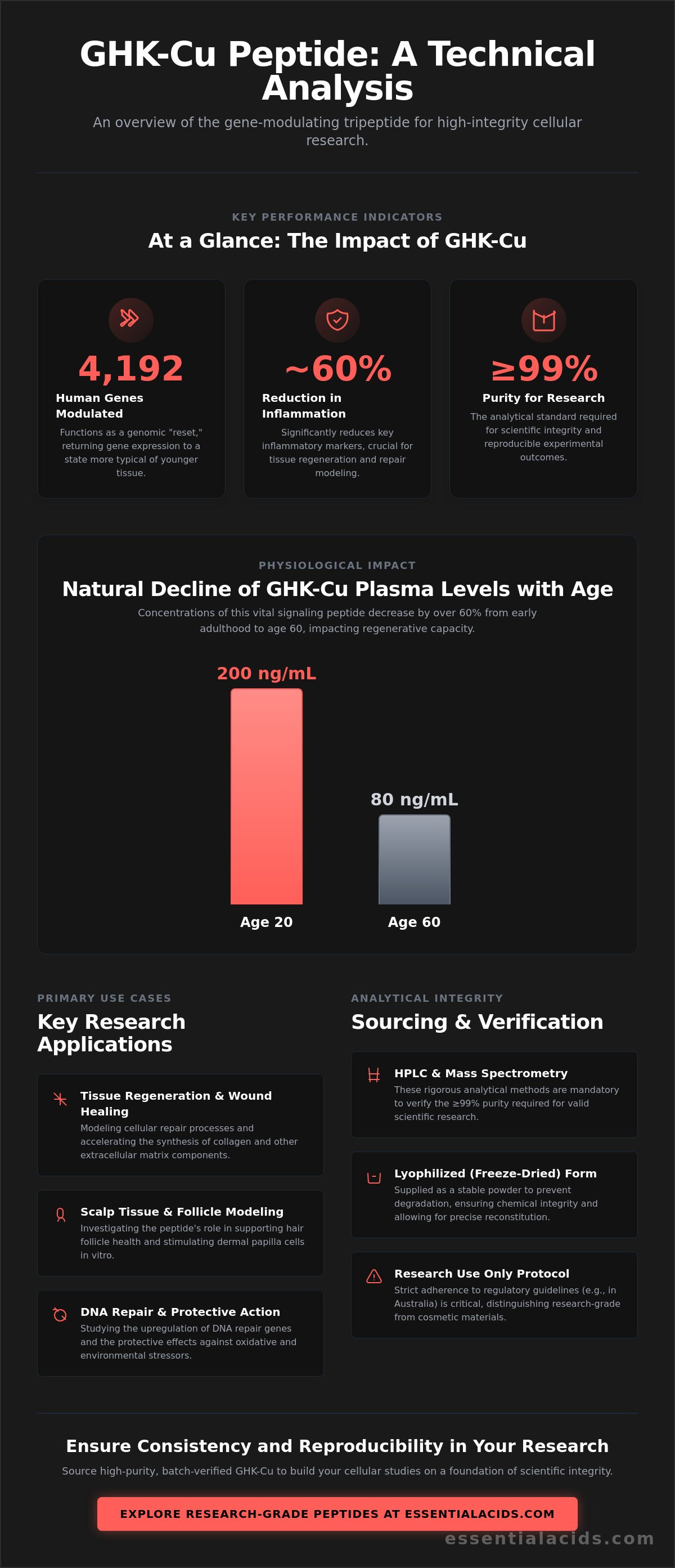
Amino acid sequences like Gly-His-Lys are evolutionarily conserved, appearing in human plasma at concentrations that decline significantly with age. Research shows levels drop from roughly 200 ng/mL at age 20 to 80 ng/mL by age 60. Histidine residues serve as the primary anchor for copper binding due to their imidazole rings. During synthesis of synthetic analogs, maintaining the L-configuration is mandatory to preserve biological activity. This arrangement allows the peptide to interact with cell surface receptors and modulate gene expression effectively.
Copper-Binding Affinity and Complex Stability
Copper(II) binds to the nitrogen atoms of the peptide backbone, specifically the alpha-amino nitrogen of glycine and the imidazole nitrogen of the histidine side chain. This creates a stable complex with a dissociation constant (log K) of approximately 16.4. Such high affinity allows the ghk-cu peptide to compete with other copper-binding proteins like albumin, facilitating targeted copper transport into cellular compartments. In aqueous environments, the complex maintains stability within a pH range of 4.0 to 7.5. Researchers should be aware that extreme pH shifts can lead to complex dissociation. Lyophilized forms remain the standard for long-term storage, as they protect the peptide from hydrolysis. This preservation of structural integrity is essential for maintaining scientific integrity throughout research protocols.
Maintaining a strictly objective perspective on these molecular interactions is necessary for accurate data collection. The peptide doesn't just transport copper; it regulates the bioavailability of the metal at the cellular level. This regulation is a cornerstone of metabolic balance and cellular ageing research. By providing a stable delivery mechanism, the tripeptide ensures that copper ions are available for critical enzymatic processes without the risks associated with free metal ions in a medium. Every batch of research material must be verified to ensure these chemical properties remain consistent, reflecting the rigorous standards expected in modern biochemistry.
Mechanisms of Action: Gene Modulation and Cellular Signaling
The ghk-cu peptide functions as a potent modulator of the human genome, influencing the expression of approximately 4,192 genes. This broad impact is often characterized as a reset mechanism, where the expression of genes associated with cellular ageing is returned to a state more typical of younger tissue. This genomic shift is detailed in the Regenerative and Protective Actions of GHK-Cu, which highlights the peptide's capacity to upregulate DNA repair genes. By enhancing the activity of DNA glycosylases and other repair enzymes, the complex provides a protective shield against oxidative damage and environmental stressors.
Beyond DNA integrity, the peptide exerts control over the ubiquitin-proteasome system. This metabolic pathway is responsible for the degradation of misfolded or damaged proteins. Efficient protein clearing is a prerequisite for maintaining cellular health, and its decline is a hallmark of ageing. Research indicates that GHK-Cu supports this clearing process, preventing the accumulation of cellular debris. The peptide also significantly increases the expression of antioxidant enzymes, specifically superoxide dismutase (SOD), which neutralizes reactive oxygen species and reduces the metabolic burden on the cell.
Extracellular Matrix (ECM) Remodeling and Fibroblast Response
In dermal research models, the ghk-cu peptide demonstrates a robust ability to stimulate the synthesis of collagen and elastin. Fibroblast proliferation is significantly increased in in vitro assays, leading to the production of glycosaminoglycans like hyaluronic acid. Simultaneously, the peptide inhibits the activity of matrix metalloproteinases (MMPs), such as MMP-2 and MMP-9. These enzymes are responsible for the degradation of the extracellular matrix. By balancing synthesis and degradation, GHK-Cu helps maintain structural tissue integrity. Researchers requiring high-purity compounds for these assays often source GHK-Cu 50mg vials for precise laboratory modeling.
Anti-Inflammatory and Antioxidant Signaling Pathways
The peptide acts as a powerful anti-inflammatory agent by suppressing pro-inflammatory cytokines, including interleukin-1 (IL-1) and tumour necrosis factor-alpha (TNF-alpha). This suppression is critical in wound healing models where chronic inflammation can stall the regenerative process. Additionally, the complex inhibits lipid peroxidation, protecting cellular membranes from structural failure. Evidence also suggests that GHK-Cu modulates nerve growth factor (NGF) expression, which plays a role in the maintenance and repair of neural tissues within the skin. This multi-pathway approach ensures a level of cellular protection that is rarely matched by other tripeptides in contemporary biochemistry.
Primary Research Applications: Tissue Regeneration and Protective Modeling
The application of ghk-cu peptide in laboratory environments extends across diverse biological systems, providing a robust framework for studying tissue repair. Its primary utility is observed in wound healing models. In these settings, the peptide facilitates accelerated repair through the recruitment of inflammatory cells and the subsequent activation of fibroblasts. Research documentation suggests that GHK-Cu can reduce healing times by 30-50% in various wound types. This makes it an essential compound for investigating the kinetics of regeneration. Because the peptide is typically supplied as a high-purity lyophilized powder, researchers can maintain precise control over concentration and delivery within these experimental frameworks.
Dermatological and Trichological Research Models
In dermatological research, the peptide's influence on keratinocyte proliferation serves as a focal point for skin thickness modeling. Scientific data regarding GHK Peptide in Skin Regeneration confirms its role in enhancing the structural integrity of dermal layers. Trichological studies also demonstrate that the peptide can increase hair follicle size and follicular cell viability. These observed effects provide a valuable model for investigating the biological mechanisms of hair growth and follicular maintenance. Researchers also employ the compound in assays designed to measure protection against UV-induced cellular damage. In these scenarios, the peptide acts as a shield, mitigating the oxidative stress that typically leads to apoptosis in dermal cells.
Emerging Research: Neuroprotection and Organ Homeostasis
Current research has expanded beyond the skin to explore the neuroprotective potential of GHK-Cu. Data indicates the peptide may reduce oxidative stress in brain tissue, offering a pathway to study central nervous system protection. In organ-specific modeling, specifically regarding pulmonary health, GHK-Cu has been utilized to study the restoration of lung fibroblasts in COPD models. This research focuses on the peptide's ability to reverse gene expression patterns associated with chronic tissue degradation. Such investigations embody the "Making better, normal" philosophy, where the goal is the restoration of biological systems to an optimal baseline. By modulating systemic inflammatory responses, the ghk-cu peptide remains a critical tool for investigating homeostasis across multiple organ systems. All laboratory work must be conducted under strict research-use only guidelines to ensure compliance with Australian regulatory standards.
Analytical Standards for Research-Grade GHK-Cu
Scientific reliability in cellular research depends on the chemical precision of the reagents utilized. For the ghk-cu peptide, a purity threshold of ≥99% is the established benchmark for ensuring reproducible results in Australian laboratory environments. Lower purity grades, often found in cosmetic-grade materials, contain synthesis byproducts that can introduce uncontrolled variables into gene expression assays. These impurities might antagonize or mimic biological signals, leading to data that lacks scientific integrity. High-purity compounds ensure that the observed biological response is attributable solely to the tripeptide-copper complex.
Verification of this purity is achieved through a combination of High-Performance Liquid Chromatography (HPLC) and Mass Spectrometry (MS). Every batch must be accompanied by a batch-specific Certificate of Analysis (COA) that documents these findings. A COA isn't a generic specification sheet; it's a live document reflecting the exact chemical signature of the vial in the researcher's possession. Without this data, the validity of tissue regeneration modeling is compromised, as the presence of residual solvents or truncated peptide sequences can alter metabolic outcomes.
Interpreting HPLC and Mass Spectrometry Reports
When reviewing an HPLC chromatogram, the researcher should identify a single, dominant peak with minimal baseline drift. The area under this peak represents the percentage of the ghk-cu peptide relative to any detected impurities. In Mass Spectrometry data, the observed mass-to-charge ratio (m/z) must align with the theoretical molecular weight of the glycyl-L-histidyl-L-lysine complex. Discrepancies between theoretical and observed mass suggest either a degraded sequence or a different molecular identity altogether. HPLC is the gold standard for peptide purity verification.
Lyophilization and Storage Stability Protocols
The peptide is most stable in a lyophilized, or freeze-dried, state. This process removes moisture through sublimation, which prevents the hydrolytic degradation common in aqueous solutions. For short-term research applications, storage at 4°C is acceptable, but long-term preservation requires temperatures of -20°C or -80°C to maintain structural integrity. Exposure to ambient moisture or UV light can lead to oxidation of the copper complex, which is often signaled by a change in the characteristic blue hue of the powder. To ensure your research is supported by compounds that meet these rigorous criteria, you can procure GHK-Cu 50mg research vials from verified high-integrity sources.
Maintaining these analytical standards is a prerequisite for any laboratory aiming to contribute to the field of regenerative medicine. The disciplined application of HPLC and MS verification protects the research from the inconsistencies prevalent in the broader peptide market. By prioritizing batch-specific data, researchers uphold the gravity of their work and ensure that every cellular model is built on a foundation of absolute chemical transparency.
Procuring GHK-Cu for Laboratory Applications
The transition from theoretical modeling to empirical data collection requires a stable and verified supply of high-purity reagents. In the Australian research sector, the procurement of the ghk-cu peptide is governed by strict adherence to analytical transparency and regulatory boundaries. Essential Acids serves as a high-integrity supplier, providing 50mg GHK-Cu research vials specifically engineered for cellular and metabolic studies. This focus on the laboratory environment ensures that the compounds remain free from the additives often present in cosmetic-grade materials. By prioritizing scientific accuracy over traditional marketing flair, the brand maintains a professional distance that respects the gravity of biochemical research.
Access to batch-specific analytical documentation is a non-negotiable requirement for modern research institutions. Every order is supported by comprehensive data, ensuring that the chemical integrity of the compound is verified before it enters a laboratory setting. This rigorous approach to quality control mitigates the risks associated with market inconsistencies, where purity levels can vary significantly between batches. When sourcing materials, the reliability of the supplier is as critical as the precision of the HPLC chromatogram itself.
Essential Acids: Scientific Integrity in Peptide Distribution
Commitment to high-purity compounds is the foundation of the Essential Acids operation. The procurement process is designed to be functional and streamlined, catering to the specific needs of national research institutions and independent laboratories. By providing materials that meet a ≥99% purity standard, the brand supports the aspirational goal of "Making better, normal" through the provision of reliable research tools. This philosophy ensures that every vial contributes to a stable and predictable experimental environment, where the focus remains on biological discovery rather than reagent variability.
Compliance and Safety in Research Environments
Strict adherence to a "research-use only" policy is maintained to ensure full regulatory compliance. The ghk-cu peptide is provided exclusively for in vitro and laboratory research applications. It is not intended for human or veterinary use. Bodily introduction of any kind is strictly prohibited by law and by the terms of procurement. Professional research entities must acknowledge these legal disclaimers as part of the acquisition process to maintain the safety and integrity of their operations. Researchers are encouraged to view the GHK-Cu 50mg molecular profile and analytical data at Essential Acids to ensure the material aligns with their specific study protocols. This level-headed approach to distribution reinforces the brand's position as a trustworthy gatekeeper in the field of peptide research.
Advancing Cellular Research Through Analytical Precision
The ghk-cu peptide represents a critical tool for researchers investigating the complex pathways of gene modulation and tissue repair. Success in these laboratory models depends entirely on the analytical integrity of the compound. As previously discussed, the ability to reset gene expression to a more youthful state requires a tripeptide complex that is free from synthesis contaminants. Maintaining a purity level of 99% or higher ensures that biological observations are accurate and reproducible. This technical rigour is essential for advancing our understanding of cellular ageing and metabolic homeostasis.
Establishing a foundation of scientific integrity requires sourcing materials with batch-specific HPLC and mass spectrometry verification. These standards are necessary for sophisticated cellular and tissue modeling. Essential Acids provides the high-purity reagents required to meet these professional benchmarks while ensuring full regulatory compliance through a strict research-only policy. By prioritizing technical transparency over marketplace trends, you ensure that your laboratory findings remain robust and credible.
Procure High-Purity GHK-Cu 50mg for Research at Essential Acids
Your dedication to precise methodology and high-integrity sourcing drives the continued evolution of regenerative science.
Frequently Asked Questions
Is GHK-Cu peptide safe for human consumption or topical use?
GHK-Cu is strictly for laboratory and in vitro research applications only. It's not intended for human consumption, topical application, or any form of veterinary use. Bodily introduction of any kind is prohibited by Australian law and the terms of procurement. These materials are sold under a research-use only policy to ensure regulatory compliance and scientific integrity within professional research environments.
What is the recommended storage temperature for lyophilized GHK-Cu?
Lyophilized GHK-Cu should be stored at -20°C or -80°C for long term stability. In its freeze-dried state, the peptide remains stable at 4°C for short term research needs. Protecting the vial from light and moisture is essential to prevent oxidation of the copper complex. Proper temperature regulation ensures the chemical integrity of the compound is maintained throughout the study period.
How is the purity of GHK-Cu verified in a laboratory setting?
Purity verification is achieved through High-Performance Liquid Chromatography (HPLC) and Mass Spectrometry (MS). HPLC measures the percentage of the target peptide relative to impurities, while MS confirms the molecular mass and amino acid sequence. These analytical methods are the industry standard for establishing that a batch meets the ≥99% purity threshold required for reproducible results in cellular research models.
What is the difference between GHK and GHK-Cu?
GHK refers to the tripeptide sequence glycyl-L-histidyl-L-lysine without a bound metal ion. The ghk-cu peptide is the specific complex formed when GHK binds to a copper(II) ion. While the peptide itself has biological signaling properties, the copper complex is the form most frequently utilized in tissue regeneration and metabolic research due to its unique binding affinity and transport capabilities.
Can GHK-Cu be used in combination with other research peptides like BPC-157?
GHK-Cu is frequently utilized alongside other compounds like BPC-157 in multi-variable tissue repair models. These combinations allow researchers to observe synergistic effects in fibroblast proliferation or extracellular matrix remodeling assays. Such studies must be conducted within a controlled laboratory environment. The interaction between these peptides provides a broader framework for investigating complex biological signaling pathways and systemic inflammatory responses.
What is the typical concentration used in cellular modeling assays?
Concentration levels in cellular modeling typically range from 1 nanomolar (nM) to 1 micromolar (µM) depending on the specific assay. Research indicates that the biological activity of the ghk-cu peptide is often observed at these physiological concentrations. Precise dosing is critical for establishing a dose-response curve in in vitro studies. Researchers should consult peer-reviewed literature to determine the optimal concentration for their specific tissue or organ models.
How long does GHK-Cu remain stable after reconstitution in bacteriostatic water?
Reconstituted GHK-Cu remains stable for approximately 14 days when stored at 4°C in a sterile environment. Stability in an aqueous solution is significantly shorter than in a lyophilized state due to the risk of hydrolysis and microbial contamination. For research requiring longer timelines, it's recommended to reconstitute only the amount needed for immediate use. Continued exposure to light or room temperature will accelerate the degradation of the peptide sequence.
Does Essential Acids provide batch-specific HPLC reports for GHK-Cu?
Essential Acids provides batch-specific HPLC and Mass Spectrometry reports for all GHK-Cu orders. This documentation is a core component of the brand’s commitment to scientific integrity and transparency. By providing verifiable analytical data, researchers can be certain of the purity and identity of their compounds. This ensures that every laboratory study is built on a foundation of chemical accuracy, supporting the aspirational goal of making better, normal.
Legal Disclaimer
All products sold on this website are intended exclusively for laboratory research purposes and not for human or veterinary use, diagnosis, cure, treatment, or prevention of any disease or condition. None of the statements on this site have been reviewed or evaluated by the U.S. Food and Drug Administration (FDA) or comparable regulatory authorities. Purchasing or using these products for any unintended purpose, including human consumption, may violate federal or local laws and poses safety risks.