

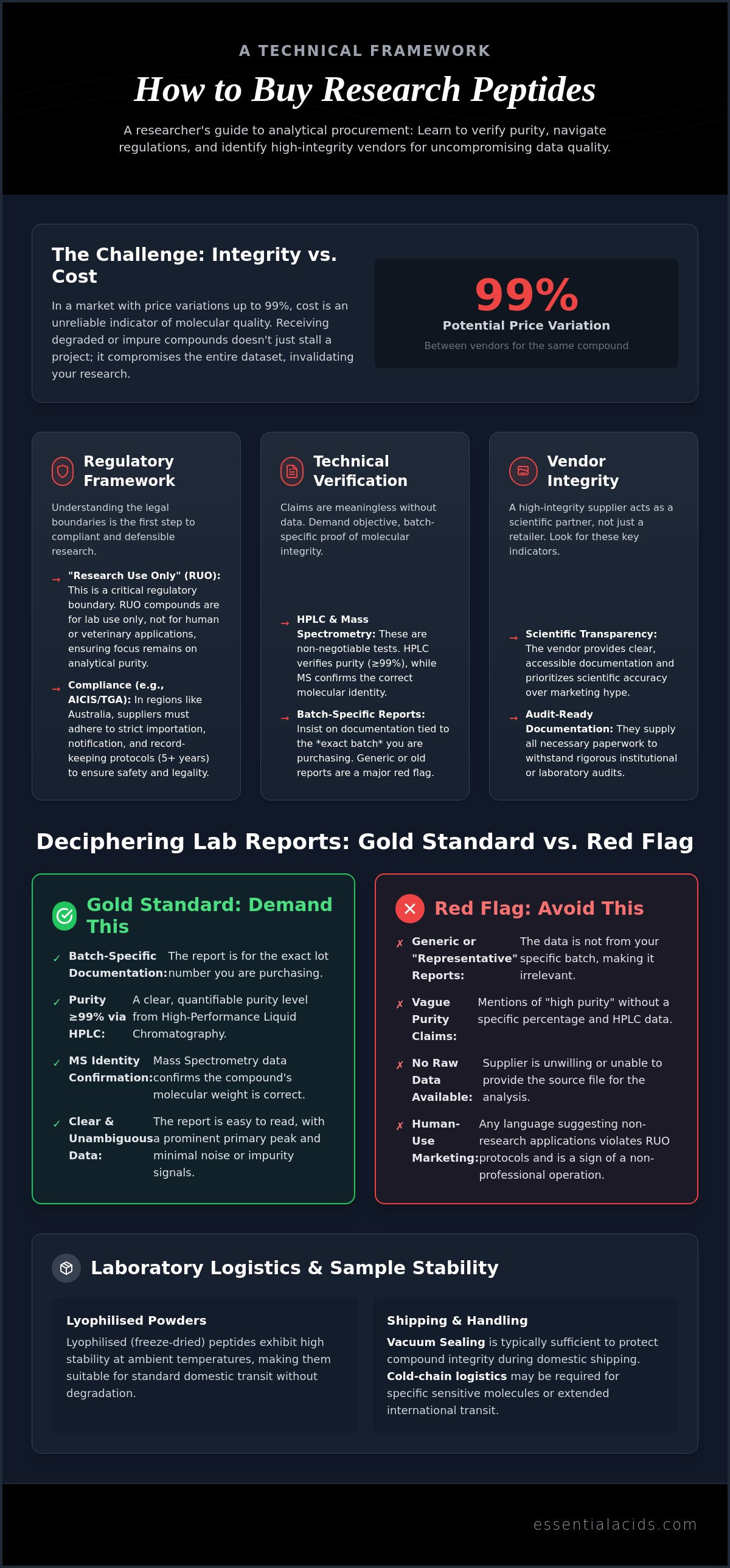
With price variations for compounds like BPC-157 reaching as much as 99% between vendors, the financial cost of laboratory procurement is often the least reliable indicator of molecular integrity. In the current July 2026 regulatory environment, where the FDA continues to reclassify peptides and the Pharmacy Compounding Advisory Committee reviews eligibility for Category 1 status, the burden of verification rests entirely on the researcher. Learning how to buy research peptides requires a shift from retail-style shopping to rigorous, analytical procurement.
It's a reality that receiving degraded or impure compounds doesn't just stall a project; it compromises the entire dataset. You likely recognize the risks associated with ambiguous batch testing and the lack of transparency that often obscures scientific integrity. This guide provides the technical framework for securing high-purity compounds with absolute precision. You'll learn to analyze HPLC reports, verify ≥99% purity levels, and maintain documentation that withstands laboratory audits. We'll examine the specific criteria for sourcing molecules like 5-Amino-1MQ and TB-500 while adhering to strict "Research Use Only" protocols, ensuring your work aligns with our commitment to making better, normal.
Key Takeaways
- Define the legal boundaries of 'Research Use Only' (RUO) compounds and navigate the 2026 AICIS and TGA regulatory frameworks for compliant procurement.
- Identify the technical nuances of High-Performance Liquid Chromatography (HPLC) and Mass Spectrometry to verify the absolute purity and identity of molecular samples.
- Master the criteria for how to buy research peptides by prioritizing batch-specific analytical documentation over generic or representative testing reports.
- Evaluate the stability of lyophilised powders during domestic transit and determine when vacuum sealing is sufficient versus the requirement for cold-chain logistics.
- Recognize the indicators of high-integrity vendors that demonstrate scientific transparency and provide the documentation necessary for rigorous laboratory audits.
The Regulatory Framework for Research Peptide Procurement in 2026
The procurement of high-purity biochemicals in 2026 requires more than a simple transaction. It demands a rigorous understanding of the legal classifications that govern laboratory materials. When investigators determine how to buy research peptides, the most critical distinction is the "Research Use Only" (RUO) designation. This isn't a mere label; it's a regulatory boundary that defines the intended application and the manufacturing standards of the material. By maintaining this distinction, suppliers uphold the scientific integrity required for disciplined laboratory work.
RUO compounds are synthesized specifically for laboratory experimentation and are not intended for human or veterinary use. This separation is vital because the chemical peptide synthesis methods used for research materials prioritize analytical purity and molecular integrity over the specific regulatory pathways required for clinical pharmaceuticals. A professional supplier avoids human-use marketing to ensure that the quality of the compounds remains the primary focus. This objective approach distinguishes high-integrity vendors from retail-style operations that may compromise safety for market trends.
Understanding the RUO Designation
The RUO standard acts as a protective framework for both the supplier and the research institution. In a professional setting, mislabelled or misrepresented compounds lead to catastrophic failures in data collection and laboratory safety. Legal requirements for laboratory-bound chemical distribution dictate that these materials must remain within controlled environments. Unlike clinical-grade pharmaceuticals, which undergo specific human-safety trials and are dispensed by pharmacies, research chemicals are analyzed for their biochemical properties and metabolic interactions within in-vitro models. This clear separation prevents the accidental introduction of variables that could skew analytical results or compromise an audit trail.
Compliance Standards for Australian Suppliers
In Australia, the regulatory landscape is overseen by the Australian Industrial Chemicals Introduction Scheme (AICIS) and the Therapeutic Goods Administration (TGA). While the TGA manages substances intended for therapeutic use, AICIS regulates the importation and notification of industrial chemicals, including many used in research. Suppliers must adhere to strict notification protocols when introducing new high-purity biochemicals into the country to ensure environmental and institutional safety. Identifying how to buy research peptides involves verifying that a supplier understands these nuances, particularly regarding compounds like 5-Amino-1MQ or BPC-157.
- AICIS requires all industrial chemicals to be assessed for their environmental and human health risks.
- Suppliers must maintain detailed records of importation and distribution for at least five years.
- Compliance ensures that the molecular integrity of compounds is maintained through verified, legal channels.
The RUO standard remains the baseline for legal procurement in 2026, ensuring that all distributed compounds are utilized strictly within a disciplined research context.
Technical Verification: Deciphering HPLC and Mass Spectrometry Reports
Analytical transparency remains the only objective metric when determining how to buy research peptides for high-stakes laboratory work. While many suppliers claim 99% purity, these figures are functionally meaningless without raw data from High-Performance Liquid Chromatography (HPLC) and Mass Spectrometry (MS). Standardizing these procedures often aligns with broader institutional frameworks, such as the NIDA Ordering Guidelines, which emphasize the importance of rigorous documentation for research materials. Understanding the technical nuances of these reports is essential for anyone establishing protocols for how to buy research peptides in a professional context.
The integrity of a laboratory sample is verified by the presence of batch-specific documentation. Generic reports or "representative" analysis from previous years suggest a lack of quality control. Red flags include inconsistent dates, missing laboratory headers, or batch numbers that don't match the physical product. If a report appears recycled or exhibits signs of digital alteration, the scientific integrity of the compound is compromised. Maintaining scientific integrity through batch-specific analysis ensures that research variables remain controlled and reproducible.
How to Read an HPLC Chromatogram
An HPLC chromatogram displays the separation of chemical components over time. The primary peak represents the target peptide; its purity is determined by calculating the area under the curve (AUC) relative to any secondary peaks. High baseline noise or the presence of multiple smaller peaks indicates chemical impurities or degradation. Researchers must verify the retention time against known standards for specific peptides to ensure the sample behaves as expected under standardized conditions. For researchers seeking to refine their sourcing protocols, our technical guide to laboratory procurement provides further depth on document verification.
Mass Spectrometry: Confirming Molecular Identity
While HPLC measures purity, Mass Spectrometry confirms the identity of the molecule by measuring its mass-to-charge ratio (m/z). This observed value must match the theoretical molecular weight of the peptide. It's critical to distinguish between the "salt weight" and the "net peptide weight" in these reports. Most research peptides are synthesized as salts, such as acetates or trifluoroacetates, which contribute to the total mass. A detailed MS report should clarify the actual peptide content to ensure accurate molar calculations in your research protocols.
- Primary Peak: Should account for ≥99% of the total AUC.
- m/z Ratio: Must align with the specific amino acid sequence weight.
- Batch Consistency: Analytical dates must precede the delivery date by a reasonable margin.
Identifying High-Integrity Vendors: A Checklist for Researchers
The digital marketplace for biochemicals is often saturated with aggressive marketing and hyperbolic claims. For a disciplined investigator, the primary challenge in how to buy research peptides is filtering out retail-style entities to find a partner characterized by "quiet authority." A high-integrity supplier doesn't rely on flashy sales tactics or lifestyle-oriented branding. Instead, the quality of the compounds and the precision of the analytical data are expected to speak for themselves. This professional distance is a hallmark of a vendor that prioritizes scientific integrity over market trends.
One of the most significant indicators of a professional operation is the absence of "wellness" crossover. When a catalog includes biological classifications like metabolic or cellular ageing processes rather than consumer-focused categories, it signals a commitment to the scientific community. High-level suppliers maintain a dedicated research-only focus. They avoid the liability of mixing laboratory materials with products intended for the general public, ensuring that every compound, from 5-Amino-1MQ to BPC-157, remains strictly within the bounds of laboratory experimentation.
Vendor Red Flags to Avoid
Reliable procurement is a process of elimination. If a supplier offers medical advice, dosing instructions, or therapeutic "benefits," they've abandoned the regulatory framework of research-use only distribution. Such behavior is a primary indicator of a non-compliant operation. Additionally, a lack of verifiable business registration or clear contact information suggests a lack of accountability. Researchers should also be wary of unrealistically low prices. While research-grade BPC-157 typically ranges from $30 to $100 for a vial in 2026, prices significantly below this threshold often indicate compromised purity, the use of bulk fillers, or a complete lack of batch-specific testing.
Green Flags of a Reliable Research Partner
A trustworthy partner operates with absolute transparency regarding their supply chain and manufacturing origin. When determining how to buy research peptides, look for vendors that provide batch-specific analytical data as a standard practice rather than an afterthought. This means the HPLC and Mass Spectrometry reports must match the specific batch number on your vial, not a "typical" or "representative" analysis from a year prior. Professional communication will always focus on chemical specifications, molecular weight, and purity levels rather than anecdotal outcomes. This level-headed pace respects the user's professional focus and reinforces the brand's reliability as a scientific gatekeeper.
- Analytical Transparency: Provision of batch-specific COAs for every order.
- Regulatory Adherence: Clear disclaimers regarding the non-therapeutic nature of all compounds.
- Technical Focus: Use of biological and biochemical classifications in all documentation.
Laboratory Logistics: From Order Fulfillment to Sample Stability
The transition from analytical verification to physical procurement represents a critical phase in maintaining scientific integrity. When researchers determine how to buy research peptides, the focus often centers on purity reports, yet the logistics of fulfillment and transit are equally vital to the final data outcome. A compound that tests at 99% purity at the point of manufacture can arrive in a compromised state if thermal and mechanical stability protocols aren't strictly observed. Managing these variables ensures that the molecular structure remains intact from the laboratory warehouse to your specific research environment.
Logistical transparency is a hallmark of a high-integrity partner. It's not enough to simply dispatch a package; the supplier must account for the environmental stressors that occur during domestic transit. Establishing a reliable protocol for how to buy research peptides requires an understanding of how lyophilisation and vacuum sealing mitigate these risks. Secure high-purity compounds for your laboratory research through our analytical-grade research catalog.
Ensuring Chemical Stability During Shipping
Lyophilisation, or freeze-drying, is the primary method used to protect molecular structures from thermal degradation. By removing moisture through sublimation, the peptide is rendered into a stable, solid state that is significantly less reactive than its liquid counterpart. This process prevents the hydrolytic cleavage of peptide bonds during transit. While lyophilised powders are generally robust, they remain sensitive to UV exposure and excessive vibration, which can lead to structural fragmentation. Domestic shipping in Australia requires specific thermal considerations in 2026 due to extreme ambient temperature fluctuations that can exceed the stability thresholds of sensitive molecular bonds. Vacuum sealing acts as a secondary barrier, preventing oxidation and moisture ingress that could compromise the sample before it reaches the laboratory.
Receiving and Storing Research Materials
Upon delivery, immediate adherence to storage protocols is required to ensure long-term sample integrity. For materials intended for immediate use, short-term storage at -20°C is typically sufficient to maintain stability. However, for long-term preservation or when working with highly sensitive sequences, temperatures of -80°C are necessary to arrest all metabolic and chemical activity within the vial. Moisture remains a persistent threat; therefore, the use of desiccants within storage containers is recommended to prevent degradation. Review our profile on BPC-157 research standards for storage specifics related to high-purity samples.
Reconstitution is the final step in the logistics chain. The integrity of the research depends on using a sterile medium that inhibits microbial contamination. The role of BAC Water (Bacteriostatic Water) is fundamental here, as it contains 0.9% benzyl alcohol to preserve the solution for multi-use laboratory applications. Without this specific medium, the risk of rapid degradation and bacterial growth increases, potentially invalidating research results.
- Short-term storage: -20°C for up to 12 months.
- Long-term storage: -80°C for multi-year stability.
- Reconstitution: Only use bacteriostatic media to ensure sample longevity.
Essential Acids: Upholding Scientific Integrity in Research Supply
Essential Acids serves as a rigorous scientific gatekeeper for the laboratory community. Our operation is defined by the philosophical signature "Making better, normal," which reflects a commitment to providing high-standard materials that allow researchers to push the boundaries of biological understanding. When investigators evaluate how to buy research peptides, they require more than a storefront; they require a partner that prioritizes molecular integrity over the trends of the marketplace. We've built our reputation on a disciplined emotional weight, recognizing that the precision of your results depends on the precision of our compounds.
Our catalog is not curated based on commercial popularity but on biochemical relevance and analytical stability. Compounds such as 5-Amino-1MQ are selected through a rigorous assessment process to ensure they meet the specific needs of metabolic and cellular research. This focus distinguishes our role from that of a retail entity, positioning us as a stable and well-regulated source for the Australian scientific community. By maintaining a professional distance and adhering to strict "research-use only" protocols, we ensure that the compounds speak for themselves without the need for aggressive sales tactics.
Our Analytical Standards
Scientific integrity is a core value that dictates every aspect of our supply chain. We don't release any material for sale until it has undergone batch-specific verification for both purity and identity. This isn't a "representative" analysis; it's a specific commitment to the exact vial that enters your laboratory. Transparency is maintained through open access to HPLC and Mass Spectrometry data, allowing researchers to perform their own audits of our quality assurance processes. This level of detail is essential when determining how to buy research peptides with the confidence required for peer-reviewed discovery. We maintain a strictly professional environment where the focus remains on chemical specifications rather than anecdotal claims.
A Partner in Scientific Discovery
We view our role as providing the essential molecular tools required for breakthroughs in neuroscience, metabolic pathways, and cellular ageing. This partnership is built on "Quiet Authority," where reliability and expertise form the foundation of long-term collaboration. By providing compounds that meet the highest technical criteria, we support the Australian research sector in its pursuit of objective truth. Our utilitarian communication flow respects your professional focus, ensuring that information is conveyed with maximum clarity and minimum ambiguity. If your research protocols demand verified molecular integrity, we invite you to explore our catalog of high-purity research peptides.
Advancing Laboratory Precision through Analytical Rigor
Successful procurement in 2026 hinges on the ability to verify molecular identity through batch-specific HPLC and MS data. As established, the distinction between research chemicals and clinical pharmaceuticals is a critical boundary that protects the integrity of your data. Refining your protocol for how to buy research peptides requires shifting from transactional purchasing to technical vetting; this ensures every compound arrives with a verifiable audit trail. By prioritizing analytical transparency and robust cold-chain logistics, you eliminate the variables that compromise laboratory outcomes and stall progress.
Essential Acids remains a stable partner for the scientific community, offering Australian national fulfillment and a catalog defined by strict research-use only compliance. We provide the documentation necessary for rigorous audits, ensuring your focus remains on the discovery process rather than the quality of the material. Accessing batch-specific HPLC/MS reports for every sample isn't just a preference; it's a requirement for high-stakes research. Secure high-purity compounds for your laboratory at Essential Acids and maintain the standards your research demands. Your commitment to precision drives the progress of tomorrow.
Frequently Asked Questions
Is it legal to buy research peptides in Australia for laboratory use?
It's legal to procure research peptides in Australia when they're intended strictly for laboratory experimentation and comply with AICIS industrial chemical regulations. These compounds aren't therapeutic goods and don't fall under TGA jurisdiction for human use. Researchers must ensure the supplier adheres to importation protocols and provides analytical documentation that confirms the materials are restricted to in-vitro or animal research environments.
How do I know if a peptide supplier is legitimate?
A legitimate supplier is identified by their adherence to scientific integrity and the absence of marketing directed at human consumption. Look for vendors that provide batch-specific HPLC and Mass Spectrometry reports rather than generic "typical" analysis. Professional suppliers maintain a clinical tone and won't offer dosing instructions or medical advice. Verifiable business registrations and clear contact information are also essential markers of a reliable research partner.
What is the difference between 98% and 99% purity in research chemicals?
The difference between 98% and 99% purity represents a 100% increase in the concentration of unknown impurities. In a 10mg sample, 98% purity contains 200mcg of impurities, while 99% contains only 100mcg. For sensitive laboratory assays, even minor contaminants can interfere with cellular responses or metabolic data. High-purity compounds ensure that the observed results are attributable to the peptide sequence rather than synthesis byproducts.
Can I use research peptides for personal health or diagnosis?
Research peptides are strictly prohibited for personal health, diagnosis, or any form of human consumption. These compounds are distributed exclusively for laboratory experimentation. They aren't pharmaceutical-grade drugs and haven't undergone the clinical trials required for human safety. Using these materials for therapeutic purposes is illegal and bypasses the essential safety frameworks established by the TGA to protect public health.
How should I store my peptides once they arrive at the lab?
Lyophilised peptides should be stored in a freezer at -20°C for short-term research or -80°C for long-term molecular stability. Once reconstituted with BAC Water, the solution must be refrigerated and used within a specific timeframe to prevent degradation. It's critical to keep vials away from UV light and minimize temperature fluctuations to maintain the structural integrity of the peptide bonds during your study.
What documents should I look for when buying research peptides?
When determining how to buy research peptides, you must verify the presence of batch-specific HPLC and Mass Spectrometry reports. These documents confirm the purity and molecular weight of the specific batch you receive. Generic certificates of analysis (COAs) that lack current dates or batch numbers are insufficient for professional laboratory audits. Ensure the lab header and analytical methods are clearly stated on each report for full transparency.
Why is batch-specific testing more important than a general COA?
Batch-specific testing is superior to a general COA because it accounts for the unique profile of a single synthesis run. Typical analysis reports only show what a lab can produce, not what it has produced for your specific order. Synthesis variables can lead to different purity levels or impurity types in every batch. Relying on general data introduces uncontrolled variables into your research environment and compromises scientific integrity.
Do research peptides require cold-chain shipping in Australia?
Most lyophilised peptides are stable at ambient temperatures during domestic transit, but the extreme Australian summer often necessitates thermal protection. Vacuum-sealed, freeze-dried powders are robust, yet prolonged exposure to temperatures exceeding 40°C can initiate structural fragmentation. While dry ice isn't always required for short domestic hops, high-integrity suppliers use insulated packaging to mitigate thermal spikes during the fulfillment process and protect the sample.
Legal Disclaimer
All products sold on this website are intended exclusively for laboratory research purposes and not for human or veterinary use, diagnosis, cure, treatment, or prevention of any disease or condition. None of the statements on this site have been reviewed or evaluated by the U.S. Food and Drug Administration (FDA) or comparable regulatory authorities. Purchasing or using these products for any unintended purpose, including human consumption, may violate federal or local laws and poses safety risks.