

The utility of Thymalin in modern immunology isn't found in simple cellular stimulation but in its capacity to interact directly with the double helix. While many bioregulators remain poorly defined in their action, current Thymalin research focuses on its role as a multi-component cytomedin that regulates gene expression through specific DNA-peptide binding. This technical precision is vital for Australian researchers navigating the rigid regulatory landscape of 2026, where the Therapeutic Goods Administration has designated these peptides as Schedule 4 substances. Maintaining scientific integrity requires a departure from anecdotal evidence in favour of verified, batch-specific analytical data.
You're likely aware of the challenges involving inconsistent laboratory protocols and the ambiguity surrounding the composition of thymic extracts. This article provides a comprehensive technical profile of Thymalin, detailing its molecular mechanisms and the precise handling standards required to maintain peptide integrity. We'll preview the analytical verification processes and the rigorous documentation necessary for sourcing high-purity research materials. By establishing a clear protocol for laboratory use, we aim to support the philosophy of making better, normal through disciplined scientific inquiry.
Key Takeaways
- Define the molecular classification of Thymalin as a cytomedin and its role in gene regulation via direct DNA interaction.
- Analyze the focus of contemporary Thymalin research on T-cell differentiation and the mitigation of cellular senescence in laboratory environments.
- Implement precise laboratory handling standards, including the use of BAC Water for reconstitution to ensure molecular stability.
- Ensure scientific integrity by verifying analytical standards, specifically the requirement for 98% purity and batch-specific HPLC documentation.
What is Thymalin? Molecular Definition and Classification
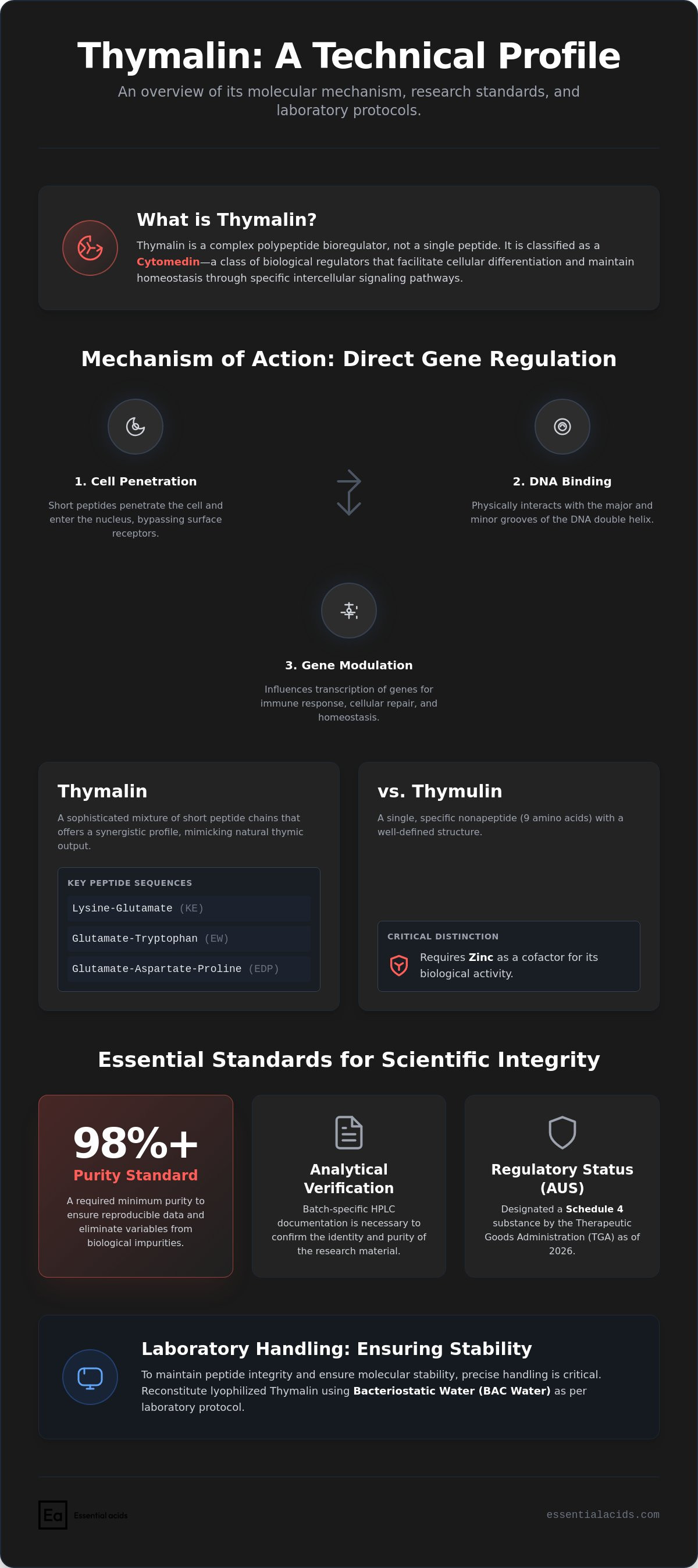
Thymalin is defined as a complex polypeptide bioregulator, a substance originally isolated from the thymus gland to study its influence on the immune system. It isn't a single isolated peptide but a sophisticated mixture of short peptide chains. Essential Acids provides this compound strictly for analytical and laboratory research applications; it's not intended for human or animal consumption. Within the context of contemporary Thymalin research, this substance is classified as a "cytomedin." This class of biological regulators is defined by its capacity to facilitate cellular differentiation and maintain homeostatic balance through specific intercellular signaling pathways.
In laboratory models, researchers utilize the compound to investigate the restoration of thymic function and the modulation of immune signaling. Unlike single-target ligands, Thymalin acts as a multi-system bioregulator, influencing various physiological pathways simultaneously to achieve a coordinated biological response. This breadth of action makes it a focal point for studies involving systemic ageing and immunological decline.
The Biochemical Composition of Thymalin
The molecular structure of Thymalin comprises several critical short peptide sequences, most notably Lysine-Glutamate (KE), Glutamate-Tryptophan (EW), and Glutamate-Aspartate-Proline (EDP). These fractions are thought to be the primary drivers of its biological activity. It's vital to distinguish this complex from Thymulin, which is a specific nonapeptide that requires zinc as a cofactor for biological activity. While both originate from the thymus, Thymalin provides a broader spectrum of peptide fractions that characterize the "cytomedin" class. This class of bioregulators functions by transferring information between cells to ensure systemic homeostasis and proper cellular maturation.
Evolution of Thymic Peptide Research
The history of thymus-derived compounds is rooted in early gerontology and immunology studies. Initial research relied on crude glandular extracts, which often suffered from batch-to-batch inconsistency and the presence of unwanted proteins. Modern Thymalin research has transitioned away from these primitive methods toward the use of high-purity, research-grade polypeptides. This evolution ensures that experimental data is reproducible and free from the variables introduced by biological impurities.
When comparing this complex to other thymic analogs, such as Thymosin Alpha-1, distinct differences in research utility emerge. While Thymosin Alpha-1 is a single synthetic peptide with a well-defined 28-amino acid sequence, Thymalin offers a synergistic profile that more closely mimics the natural thymic output. Australian researchers often select between these based on whether the study requires a targeted immune modulator or a broader bioregulatory agent. Maintaining a minimum 98% purity standard is essential for both to ensure scientific integrity in any laboratory setting.
Mechanism of Action: DNA Binding and Gene Regulation
The biological efficacy of the compound is rooted in its ability to penetrate the cell nucleus and interact directly with the genetic apparatus. Unlike traditional pharmacological agents that rely on surface receptors, the short peptides within this complex facilitate the specific binding to double-stranded DNA. This physical interaction occurs within the major and minor grooves of the DNA helix, influencing the transcription of genes responsible for immune response and cellular repair. Current Thymalin research emphasizes this non-receptor-mediated pathway as a primary driver for the differentiation of hematopoietic stem cells in various laboratory settings.
By modulating the expression of gerontogenes, the bioregulator assists in maintaining cellular homeostasis in aging models. This gene-regulatory function is discussed extensively in literature regarding Thymalin for immunocorrection, which highlights how these interactions lead to the synthesis of functional proteins required for systemic stability. For laboratories requiring verified compounds to investigate these pathways, procuring high-purity Thymalin is a prerequisite for maintaining scientific integrity and ensuring reproducible data.
Interaction with Histone Proteins
The components of the complex interact with histone proteins to modify chromatin structure. By influencing histone acetylation and methylation, the peptides promote a transition from heterochromatin to euchromatin, thereby increasing the accessibility of specific gene loci. The KE (Lys-Glu) dipeptide is particularly significant in this process; it demonstrates a high affinity for DNA sequences, facilitating the stabilization of genomic integrity and providing a framework for epigenetic regulation. This modification of the chromatin landscape allows for the activation of repair mechanisms that are often silenced during cellular senescence.
T-Cell Maturation and Differentiation
Within in-vitro immune models, the mechanism of action extends to the guidance of T-lymphocyte precursor development. The bioregulator directs these precursors to mature into functional subsets, effectively normalizing the helper/suppressor T-cell ratio. This maturation process is critical for preventing the dysregulated cytokine profiles often observed in pro-inflammatory research environments. By regulating the production of interleukins and interferons at the transcriptional level, the peptides help prevent the onset of cytokine storms in laboratory models. This capacity to restore cytokine balance underscores the compound's utility in complex immunological studies where precise cellular signaling is required.
Primary Research Applications in Laboratory Models
Laboratory investigations involving this cytomedin extend across multiple scientific disciplines, moving beyond basic immunology into the fields of gerontology and neuroscience. The primary utility in current Thymalin research lies in its ability to restore physiological equilibrium within compromised biological systems. Researchers utilize these peptide complexes to observe the modulation of T-cell subsets and the stabilization of cytokine production, which are critical metrics in understanding systemic resilience. These applications are strictly for laboratory-use only and provide a framework for studying cellular homeostasis under various stress conditions.
In gerontology models, the compound is studied for its capacity to mitigate the effects of thymic involution, a process intrinsically linked to the acceleration of biological age. Scientific interest also extends to the neuroprotective potential of thymic signaling, where researchers analyze the cross-talk between the immune system and the central nervous system. This interdisciplinary approach provides a more holistic view of cellular maintenance than traditional single-pathway studies, aligning with the objective of defining precise parameters for biological optimization.
Cellular Aging and Longevity Models
Studies focusing on cellular decline often measure the impact of thymic peptides on antioxidant enzyme activity, such as superoxide dismutase and glutathione peroxidase. By reducing oxidative stress markers, the bioregulator assists in maintaining genomic stability during the aging process. Research indicates that the regulation of protein synthesis is a key factor in slowing cellular senescence. Experimental data from animal models suggests a strong correlation between the maintenance of thymic function and the preservation of systemic health markers, providing a valuable model for studying the longitudinal effects of peptide intervention.
Hematopoietic Regeneration Research
In models of bone marrow suppression, the compound is utilized to observe the recovery of leukocytes, monocytes, and platelets. This is particularly relevant in studies involving recovery from chemical or radiation-induced marrow damage. The ability of the peptides to stimulate blood cell formation is a significant area of focus, often involving the analysis of Thymalin and Stem Cell Differentiation within the hematopoietic niche. This research helps clarify how short peptides influence the maturation of progenitor cells into functional blood components.
Researchers frequently investigate the synergistic effects of combining various bioregulators to enhance tissue repair protocols. For instance, studying the complex alongside BPC-157 allows for the observation of accelerated healing across multiple tissue types in controlled environments. This multi-peptide approach reflects the growing trend toward poly-bioregulatory research in Australian laboratories. Maintaining high-purity standards for all components remains the baseline for ensuring that these synergistic interactions are documented with scientific integrity.
Laboratory Handling, Reconstitution, and Stability
Thymalin is supplied as a lyophilized powder to ensure molecular stability during transport and long-term storage. This freeze-dried state protects the delicate polypeptide chains from premature degradation. Vigorous mechanical agitation must be avoided during all stages of handling to prevent the denaturing of the peptide structure. Instead, a gentle swirling motion is required to achieve a homogenous solution. This level of care is an integral component of Thymalin research, where the integrity of the compound directly dictates the validity of experimental results. This compound is strictly for research-use only.
Reconstitution must be executed within a sterile environment using BAC Water. The peptide complex exhibits high sensitivity to thermal fluctuations and ultraviolet (UV) light exposure. Consequently, vials should be shielded from direct light at all times. Researchers can verify analytical standards for their procurement needs to ensure the consistency of their laboratory environment and maintain scientific integrity.
Storage Protocols for Research Integrity
Lyophilized powder should be stored at -20°C for long-term stability, while 4°C is acceptable for short-term use. Once reconstituted, it's vital to monitor the solution, as the shelf life is significantly reduced and the risk of bacterial contamination increases. The complex doesn't tolerate repeated freeze-thaw cycles. The presence of precipitation or cloudiness within the vial serves as a definitive visual indicator of peptide degradation, rendering the sample unsuitable for analytical use. Strict adherence to these cold-chain protocols is necessary to maintain the 98% purity standard expected in high-level studies.
Analytical Concentration and Dosing Design
The calculation of volumetric ratios is required to establish precise concentrations for analytical studies. Standard methodology for Thymalin research involves the use of low-protein binding vials to minimize peptide loss, as these compounds often adhere to standard glass or plastic surfaces. A stable pH environment must be maintained to preserve the chemical structure of the cytomedin complex. Any deviation in acidity or alkalinity can lead to unintended structural modifications, compromising the study. This disciplined approach to laboratory handling reflects the commitment to making better, normal through rigorous, evidence-based inquiry.
Procuring High-Purity Thymalin for Australian Research
Procurement for Thymalin research in Australia requires strict adherence to analytical standards to ensure experimental reproducibility. Scientific integrity is maintained only when compounds meet or exceed a 98% purity threshold, as lower-grade materials introduce uncontrolled variables into the laboratory environment. Essential Acids facilitates national distribution across Australia, providing research institutions with the high-purity polypeptide complexes necessary for sophisticated immunological and gerontological studies. These materials are distributed strictly for research-use only, ensuring compliance with local regulatory frameworks and ethical guidelines.
Verification of chemical identity is achieved through two primary analytical methods. Batch-specific High-Performance Liquid Chromatography (HPLC) is utilized to identify and quantify impurities within the sample. Simultaneously, Mass Spectrometry confirms the molecular weight and precise identity of the polypeptide complex. Without this dual-layer verification, the risk of using misidentified or contaminated substances increases, which can compromise the validity of a study's findings. Researchers in Australia must prioritize suppliers that provide these batch-specific documents to maintain the gravity of their laboratory work.
Interpreting Certificates of Analysis (CoA)
A Certificate of Analysis provides a technical snapshot of the peptide's quality and is non-negotiable for high-level Thymalin research. Researchers must scrutinize chromatogram peaks to identify the presence of residual Trifluoroacetic acid (TFA) or salts, which are common byproducts of the synthesis process. High-quality research-grade materials will show a single, sharp peak on the HPLC report, whereas industrial-grade alternatives often display secondary peaks indicating degradation or synthesis errors. Understanding these visual indicators is vital for ensuring that the data generated in one laboratory can be accurately replicated in another, forming the basis of rigorous scientific inquiry. Analytical documentation serves as the primary filter between reliable data and compromised results.
The Essential Acids Commitment to Quality
The "Making better, normal" philosophy at Essential Acids is rooted in the provision of verified, high-integrity compounds. By maintaining a strict research-only distribution model, we uphold the ethical standards required by the scientific community. Our catalog allows for the integration of various research tools, such as Ipamorelin, allowing researchers to explore multi-peptide interactions within controlled models. We prioritize transparency through the provision of batch-specific documentation, ensuring that every compound meets our rigorous internal benchmarks for purity and stability. You can secure high-purity Thymalin for your laboratory research at Essential Acids to ensure the highest level of analytical accuracy and maintain the integrity of your experimental protocols.
Advancing Bioregulatory Standards in Australian Laboratory Models
The technical profile of Thymalin underscores its unique position as a cytomedin capable of direct DNA interaction. By modulating gene expression and stabilizing T-cell differentiation, the complex provides a robust framework for investigating systemic homeostasis. Maintaining the integrity of these studies depends entirely on the stability of the compound and the precision of laboratory handling protocols. Scientific integrity in Thymalin research is only achievable through the use of high-purity materials verified by batch-specific analytical documentation. Researchers don't settle for industrial-grade materials when the gravity of their findings is at stake.
To ensure the accuracy of your experimental data, you can Order High-Purity Thymalin for Laboratory Research through Essential Acids. We provide batch-specific HPLC and Mass Spectrometry documentation with every order to confirm a minimum 98% purity standard. Our strictly research-use only policy preserves the ethical boundaries of the scientific community while offering secure national shipping across Australia. We're committed to supporting your next phase of immunological inquiry with compounds that meet the highest technical benchmarks.
Frequently Asked Questions
Is Thymalin the same as Thymosin Alpha-1?
Thymalin is distinct from Thymosin Alpha-1 because it consists of a synergistic complex of various polypeptide fractions rather than a single sequence. While Thymosin Alpha-1 is a specific, single-chain synthetic peptide with 28 amino acids, Thymalin provides a broader array of short peptides like KE and EW. This complexity allows it to function as a multi-system bioregulator in laboratory models. Researchers must select the compound that aligns with their specific study parameters for immune signaling.
What is the molecular weight of the Thymalin complex?
The molecular weight of the complex isn't defined by a single value because it comprises multiple short peptide chains of varying lengths. Individual components, such as the Lys-Glu (KE) dipeptide, have a low molecular mass of approximately 276.3 Daltons. In aggregate, these fractions form a polydisperse mixture that is typically characterized by its functional activity rather than a singular dalton weight. This structural diversity is a key focus of current Thymalin research.
How should Thymalin be stored post-reconstitution in a lab environment?
Post-reconstitution, the solution must be stored at 4°C and protected from all light exposure. The peptide complex is highly sensitive to thermal degradation and UV radiation, which can lead to the denaturing of the polypeptide chains. It's recommended to use the solution within a short timeframe to prevent bacterial growth or potency loss. Freezing the solution after reconstitution is discouraged, as the expansion and contraction can compromise molecular integrity.
Can Thymalin be used for human consumption or medical diagnosis?
No, Thymalin isn't approved for human consumption, medical diagnosis, or therapeutic use in Australia. It's strictly limited to laboratory research and analytical applications to ensure regulatory compliance and scientific integrity. Any use outside of a controlled research environment is prohibited. Essential Acids maintains a firm "research-use only" policy to protect the gravity of the scientific process and adhere to all 2026 TGA guidelines regarding unapproved peptides.
What are cytomedins in the context of peptide research?
Cytomedins are a specific classification of bioregulators that transfer biological information to coordinate cellular differentiation and homeostasis. In peptide research, they're distinguished by their ability to influence systemic processes through intercellular signaling rather than targeting a single receptor. This class of compounds is vital for studying the maintenance of physiological balance within complex biological systems. Their role in gene regulation makes them a primary subject of investigation in cellular ageing studies.
How does Thymalin bind to double-stranded DNA?
Thymalin binds to double-stranded DNA by interacting with the major and minor grooves of the double helix. This physical binding allows the short peptide sequences to influence the transcription of genes associated with immune function and cellular repair. It's a non-receptor-mediated pathway that facilitates the activation or suppression of specific genetic loci. This mechanism is central to understanding how bioregulators stabilize genomic integrity in various laboratory settings.
Why is batch-specific HPLC testing important for thymic peptides?
Batch-specific HPLC testing is required to verify that the peptide purity meets the 98% threshold necessary for reproducible data. This analytical method identifies residual salts, Trifluoroacetic acid (TFA), and other impurities that could interfere with experimental outcomes. Without batch-specific documentation, researchers can't be certain of the compound's actual composition. Thymalin research requires this level of transparency to ensure that all observed biological effects are attributable to the peptide complex itself.
Does Essential Acids ship research peptides nationally in Australia?
Yes, Essential Acids provides secure national shipping for all research compounds across Australia. We ensure that our procurement process meets the needs of research institutions in every state and territory. All shipments are handled with a focus on maintaining the stability of the lyophilized peptides during transit. This reliable distribution network supports the philosophy of making better, normal by providing consistent access to high-purity analytical materials for the Australian scientific community.
Legal Disclaimer
All products sold on this website are intended exclusively for laboratory research purposes and not for human or veterinary use, diagnosis, cure, treatment, or prevention of any disease or condition. None of the statements on this site have been reviewed or evaluated by the U.S. Food and Drug Administration (FDA) or comparable regulatory authorities. Purchasing or using these products for any unintended purpose, including human consumption, may violate federal or local laws and poses safety risks.