

The molecular integrity of a research compound is defined by its analytical precision rather than its theoretical potential. In the fragmented market of research chemicals, the cu50+tb10+bc10+kpv10 peptide blend represents a sophisticated tool for investigating multi-pathway systemic repair. You've likely encountered the frustration of inconsistent purity levels and the lack of batch-specific reports that are necessary for rigorous laboratory standards. It's difficult to maintain scientific integrity when the stability of multi-peptide lyophilized powders remains unverified by third-party analysis.
This article provides a technical breakdown of the 80mg KLOW blend, focusing on the biochemical synergy between GHK-Cu, TB-500, BPC-157, and KPV. You'll gain a clear understanding of how these components interact at a cellular level and learn a standardized reconstitution protocol to ensure research accuracy. We'll also examine the laboratory standards required to verify a high-purity source, supporting the Essential Acids commitment to making better, normal through disciplined scientific inquiry.
Key Takeaways
- Identify the precise mass-volume distribution within the 80mg KLOW blend, including the specific concentrations of GHK-Cu, TB-500, BPC-157, and KPV.
- Examine the biochemical synergy of the cu50+tb10+bc10+kpv10 peptide as it relates to multi-pathway activation and signaling in cellular repair research models.
- Establish a standardized reconstitution protocol using bacteriostatic water to maintain the stability and integrity of lyophilized multi-peptide powders.
- Learn how to verify the analytical purity of research compounds through the review of batch-specific Certificates of Analysis and HPLC testing.
- Understand the role of copper-dependent signaling in facilitating enzymatic reactions and extracellular matrix remodeling within laboratory settings.
Molecular Profile of the CU50+TB10+BC10+KPV10 Blend
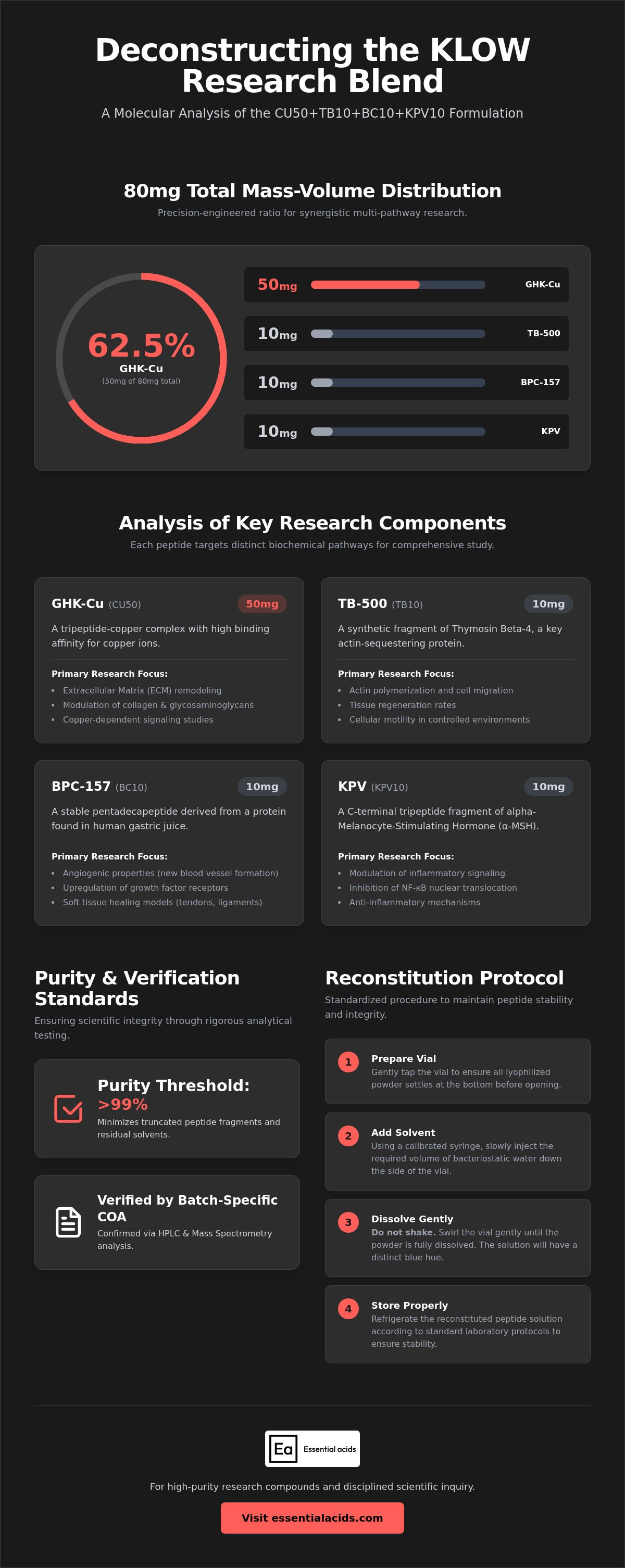
The KLOW research peptide blend is a precision-engineered lyophilized compound designed for advanced laboratory applications. Each 80mg vial contains a specific mass-volume ratio of four distinct peptides, ensuring consistency across experimental protocols. The cu50+tb10+bc10+kpv10 peptide blend is formulated with a precise distribution of components:
- 50mg GHK-Cu: A tripeptide-copper complex.
- 10mg TB-500: A synthetic fragment of Thymosin Beta-4.
- 10mg BPC-157: A pentadecapeptide investigated for tissue repair.
- 10mg KPV: A tripeptide derived from alpha-MSH.
This specific distribution allows researchers to investigate the intersection of copper-dependent signaling and systemic repair mechanisms within a single controlled environment. Maintaining high-purity standards is essential for scientific integrity. All research compounds must meet or exceed a 99% purity threshold to minimize the presence of truncated peptide fragments or residual solvents. The intended use of this blend is strictly limited to in-vitro and laboratory models. It's frequently employed in studies focusing on cellular signaling pathways and metabolic regulation.
The 80mg Concentration Framework
The 50/10/10/10 ratio isn't arbitrary. It's standardized to facilitate specific research protocols where GHK-Cu acts as the primary signaling agent, supported by secondary peptides at lower molar concentrations. The lyophilized powder exhibits a distinct blue hue, a physical characteristic attributed to the high concentration of the copper-peptide complex. Analytical verification is conducted through High-Performance Liquid Chromatography (HPLC) and Mass Spectrometry to confirm that the peptide sequence and mass-volume ratio align with batch-specific standards. This level of transparency ensures that every vial provides a reliable baseline for experimental observation, supporting a commitment to scientific integrity.
Research Applications in Molecular Biology
Researchers utilize this blend to examine extracellular matrix (ECM) modulation and the study of peptide-peptide interactions. For instance, the presence of Thymosin beta-4 (represented by the TB10 component) allows for the investigation of actin-sequestering mechanisms and cell migration. The cu50+tb10+bc10+kpv10 peptide is also a valuable tool in neuro-cellular and metabolic research models. Investigators analyze how these combined molecules influence cellular ageing and tissue remodeling processes in controlled laboratory subjects. By focusing on the precision of the laboratory, these studies align with the philosophical objective of making better, normal through rigorous evidence.
Analysis of the Four Key Research Components
The analytical value of the cu50+tb10+bc10+kpv10 peptide blend is derived from the distinct biochemical identities of its four constituents. Each molecule targets specific physiological pathways within research models, providing a multi-faceted approach to investigating systemic repair. Molecular weight and sequence data are essential for maintaining scientific integrity in any laboratory setting.
GHK-Cu (CU50) is a tripeptide consisting of glycyl-L-histidyl-L-lysine with a high binding affinity for copper ions. In investigative models, it's utilized to study extracellular matrix (ECM) remodeling, specifically the modulation of collagen and glycosaminoglycans. Its presence in the blend provides a baseline for copper-dependent signaling research and enzymatic cofactor studies.
The TB10 component represents a synthetic fragment of Thymosin Beta-4, commonly identified as TB-500. This molecule is studied for its role in sequestering G-actin, a process critical for actin polymerization and subsequent cell migration. Research focuses on its influence on tissue regeneration rates and cellular motility in controlled environments.
BPC-157 (BC10) is a stable pentadecapeptide with a sequence derived from human gastric juice. It's a cornerstone in research regarding BPC 157 for soft tissue healing, where it's investigated for its angiogenic properties and its ability to upregulate growth factor receptors in tendons, ligaments, and muscle fibers.
KPV10 consists of the tripeptide Lysine-Proline-Valine. As a C-terminal fragment of alpha-MSH, it's studied for its ability to modulate inflammatory signaling by inhibiting the translocation of NF-kappaB into the nucleus. This allows for the investigation of anti-inflammatory mechanisms without the systemic hormonal interactions associated with larger melanocortin peptides.
GHK-Cu and TB-500 Synergy
The interaction between CU50 and TB10 focuses on the intersection of copper-dependent enzymatic activity and actin polymerization. GHK-Cu facilitates copper transport, a necessary cofactor for enzymes like lysyl oxidase. When studied alongside the TB-500 fragment, researchers can observe how cellular migration interacts with a structurally reinforced ECM. This synergy is particularly relevant in investigative models detailed in our peptides for skin research overview.
BPC-157 and KPV Interaction
The combination of BPC-157 and KPV allows for a comparative analysis of peptide stability and NF-kappaB modulation. While BPC-157 is recognized for its resilience in various physiological environments, KPV provides a mechanism for studying the downregulation of inflammatory markers in the cu50+tb10+bc10+kpv10 peptide complex. For baseline standards and comparative molecular data, researchers should refer to our BPC-157 5mg molecular profile. Securing high-purity research compounds is a prerequisite for valid experimental data.
Synergistic Mechanisms in Cellular Repair Models
The coordinated signaling pathways activated by the cu50+tb10+bc10+kpv10 peptide blend offer a unique framework for investigating multi-pathway cellular responses. In laboratory subjects, researchers analyze how these four molecules interact to influence biological signaling simultaneously rather than in isolation. This simultaneous activation is critical for understanding the complex feedback loops involved in systemic repair research. By providing four distinct biochemical signals, the blend allows for a more comprehensive observation of cellular behavior in controlled environments.
GHK-Cu plays a fundamental role in this complex by facilitating the transport of copper ions to specific cellular targets. Copper is a vital cofactor for several enzymatic reactions, including the activity of superoxide dismutase (SOD), which is central to managing oxidative stress. In metabolic research environments, investigators use the cu50+tb10+bc10+kpv10 peptide to monitor how copper availability influences the modulation of oxidative stress markers. This transport mechanism ensures that enzymatic cofactors are present at the site of cellular signaling, supporting the integrity of the experimental model.
The presence of both TB-500 and BPC-157 within the blend enables the study of angiogenesis-related markers. While TB-500 is studied for its influence on endothelial cell migration, BPC-157 is investigated for its role in upregulating vascular endothelial growth factor (VEGF) receptors. Researchers observe how these two mechanisms interact to facilitate the formation of new micro-vessels in soft tissue models. This dual-action approach provides a higher degree of analytical depth than studies involving single-peptide protocols.
Extracellular Matrix (ECM) Remodeling
In vitro studies focus on how GHK-Cu influences the mRNA expression of collagen type I, collagen type III, and elastin. This is often quantified alongside the influence of BPC-157 on fibroblast migration. By measuring the rate of repair-related protein synthesis, researchers can establish a baseline for ECM modulation. These experiments help define the structural integrity of the matrix within the research model, providing data on how peptides influence the mechanical properties of laboratory-grown tissues.
Inflammatory Response Modulation
KPV serves as a specialized tool for investigating the suppression of pro-inflammatory cytokines, such as IL-1beta and TNF-alpha. The interplay between copper complexes and inflammatory signaling is a primary area of interest, as researchers evaluate the stability of the blend during cellular response assays. Maintaining a consistent environment during these assays is essential for scientific integrity. Investigators monitor how the tripeptide sequence of KPV interacts with the metabolic environment to downregulate signaling pathways associated with cellular ageing and stress.
Laboratory Protocols: Reconstitution and Handling
Maintaining the molecular integrity of the cu50+tb10+bc10+kpv10 peptide blend requires strict adherence to standardized laboratory protocols. Because lyophilized powders are highly sensitive to environmental factors and mechanical stress, the reconstitution process must be executed with precision. The primary objective is to transition the compound into a stable liquid state without inducing peptide denaturation or fragmentation. Failure to follow these steps can compromise the analytical validity of subsequent experimental assays.
Selecting the appropriate solvent is the first critical step. Bacteriostatic water, containing 0.9% benzyl alcohol, is typically preferred for research-use only vials. The antimicrobial properties of benzyl alcohol inhibit bacterial proliferation, which is essential for maintaining the purity of the solution over the duration of a study. While sterile saline is an alternative, it lacks these preservative qualities and may be less suitable for multi-assay protocols. Researchers must also calculate the concentration per mL to ensure precise application. Since the KLOW blend contains a total of 80mg of peptide mass, adding 2mL of solvent results in a final concentration of 40mg/mL.
Reconstitution Best Practices
Reconstitution involves the gradual introduction of the solvent to preserve the molecular structure of the four-peptide complex. The solvent should be aimed at the glass wall of the vial rather than directly onto the lyophilized cake. This technique prevents the high-velocity impact of the liquid from damaging the fragile peptide bonds. Once the liquid is added, the vial should be gently swirled. Mechanical agitation, such as shaking, must be avoided as it can cause foaming and lead to the degradation of the TB-500 and BPC-157 components. For optimal results, use high-purity research supplies to maintain the scientific integrity of your laboratory environment.
Stability and Storage Standards
The cu50+tb10+bc10+kpv10 peptide blend is highly sensitive to temperature fluctuations and light exposure. In its lyophilized state, the vial should be stored at -20°C for long-term stability, where it can remain viable for up to 24 months. For short-term research needs, storage at 4°C is acceptable for approximately 90 days. Once reconstituted, the solution is significantly more vulnerable to degradation and must be refrigerated at 4°C at all times. GHK-Cu is particularly susceptible to oxidation and UV light, so vials should be kept in a dark environment or opaque containers to prevent the breakdown of the tripeptide-copper complex. Adhering to these storage parameters ensures that the analytical profile of the blend remains consistent across all research phases.
Sourcing High-Purity Research Compounds
The reliability of laboratory data is fundamentally tied to the chemical quality of the precursors. When investigating the cu50+tb10+bc10+kpv10 peptide blend, researchers must prioritize analytical transparency to ensure that experimental outcomes aren't skewed by impurities. A batch-specific Certificate of Analysis (COA) is the only acceptable method for verifying the identity and purity of these compounds. Without such documentation, the scientific integrity of a study is compromised. Essential Acids maintains a commitment to making better, normal by providing rigorous data for every research compound in the catalog.
Quality Assurance in Peptide Manufacturing
Analytical verification of multi-peptide blends requires advanced methodologies beyond simple visual inspection. High-Performance Liquid Chromatography (HPLC) is employed to determine the purity levels of each constituent; meanwhile, Mass Spectrometry confirms the molecular mass and sequence of the peptides. These protocols identify potential contaminants, such as truncated sequences or residual reagents, which could interfere with cellular signaling assays. Testing a blend like KLOW is significantly more complex than testing single peptides. Each peak on the HPLC chromatogram must be clearly defined to ensure the 50/10/10/10 ratio is maintained accurately. Mass Spectrometry must also confirm four distinct molecular weights within the same sample to verify the presence of GHK-Cu, TB-500, BPC-157, and KPV. Transparency in the supply chain is a prerequisite for high-level research. For investigators focused on specific regions, our guide on buying research peptides in Australia provides a technical framework for laboratory procurement.
Compliance and Ethical Research Standards
Adherence to regulatory designations is a core value of Essential Acids. The cu50+tb10+bc10+kpv10 peptide is strictly for research-use only. It's not intended for human or veterinary consumption. Any deviation from this policy violates the terms of laboratory procurement and the ethical standards of the scientific community. Maintaining a professional distance from commercial trends allows the brand to act as a reliable gatekeeper. By prioritizing objective data over marketing claims, Essential Acids serves as a stable partner for researchers investigating the complex mechanisms of metabolic and cellular ageing. This disciplined approach ensures that the compounds speak for themselves through the precision of the results they facilitate.
Advancing Precision in Multi-Peptide Research
The integration of GHK-Cu, TB-500, BPC-157, and KPV within a single lyophilized compound provides researchers with a sophisticated framework for observing multi-pathway cellular repair. As established, the analytical precision of the 50/10/10/10 ratio is fundamental for maintaining consistent experimental baselines. Scientific integrity depends on both rigorous laboratory handling and the verification of molecular purity through batch-specific reporting. By adhering to standardized reconstitution protocols and temperature-controlled storage, investigators can ensure the stability of the cu50+tb10+bc10+kpv10 peptide throughout the duration of a study.
Essential Acids prioritizes the needs of the scientific community by offering compounds that meet strictly high-purity, research-grade standards. Every vial is supported by batch-specific HPLC and Mass Spectrometry reports to provide complete analytical transparency. For researchers operating within Australia, secure cold chain protocols are utilized for nationwide shipping to preserve the integrity of each compound from the laboratory to the final destination. It's our mission to support your work with the highest level of reliability.
View Analytical Reports and Secure CU50+TB10+BC10+KPV10 for Research
We remain a dedicated partner in your pursuit of high-level scientific inquiry as you continue making better, normal.
Frequently Asked Questions
What is the total peptide content in one KLOW vial?
The total peptide content in one KLOW vial is 80mg of lyophilized powder. This mass is distributed across four distinct components: 50mg of GHK-Cu, 10mg of TB-500, 10mg of BPC-157, and 10mg of KPV. This standardized mass-volume ratio ensures that researchers can maintain consistent molar concentrations throughout their experimental protocols. Every vial is vacuum-sealed to preserve the integrity of the multi-peptide complex during transit and storage.
How should the CU50+TB10+BC10+KPV10 blend be stored upon arrival?
The CU50+TB10+BC10+KPV10 blend must be stored at -20°C for long-term stability or 4°C for short-term research needs. Upon arrival, the lyophilized powder should be transferred immediately to a controlled temperature environment to prevent degradation. Reconstituted solutions are significantly more fragile and must be kept at 4°C at all times. Exposure to light and moisture should be minimized to maintain the analytical profile of the research compound.
Is the blue color of the powder normal for this blend?
The blue coloration of the lyophilized powder is a normal physical characteristic of this blend. This hue is specifically attributed to the 50mg concentration of GHK-Cu, which is a tripeptide-copper complex. Copper ions naturally impart a blue tint to the powder. If the powder lacks this coloration, it may indicate a discrepancy in the mass-volume ratio or the absence of the copper-peptide component, necessitating a review of the batch-specific COA.
Can this peptide blend be used for human diagnostic purposes?
No, the cu50+tb10+bc10+kpv10 peptide cannot be used for human diagnostic purposes or any form of clinical application. All Essential Acids compounds are strictly designated for research-use only in laboratory settings. They aren't approved by regulatory bodies for human or veterinary consumption. Adherence to these boundaries is a critical component of scientific integrity and legal compliance within the research community. We don't provide medical advice or consultations.
What is the recommended solvent for reconstituting the KLOW blend?
Bacteriostatic water is the recommended solvent for reconstituting the KLOW blend in a laboratory setting. The 0.9% benzyl alcohol content acts as a preservative, inhibiting bacterial proliferation and extending the stability of the solution during multi-day assays. While sterile saline is sometimes used, it doesn't offer the same antimicrobial protection. Researchers should introduce the solvent gradually to prevent mechanical stress on the peptide bonds, ensuring the molecular integrity of the solution.
How can I verify the purity of my Essential Acids peptide batch?
Researchers can verify the purity of an Essential Acids peptide batch by reviewing the batch-specific Certificate of Analysis (COA) provided with the compound. This document includes data from High-Performance Liquid Chromatography (HPLC) and Mass Spectrometry testing. These analytical methods confirm the peptide sequence, molecular weight, and purity levels, which must meet or exceed a 99% threshold. This transparency is essential for maintaining a reliable supply chain for high-level scientific inquiry.
Why is GHK-Cu included at a higher concentration (50mg) than the other peptides?
GHK-Cu is included at a higher 50mg concentration because it serves as the primary signaling agent within this specific molecular framework. The 50/10/10/10 ratio is standardized to investigate how copper-dependent enzymatic reactions interact with secondary repair signaling pathways. This distribution allows researchers to study the extracellular matrix (ECM) while observing the synergistic effects of TB-500, BPC-157, and KPV at lower molar concentrations. It's a precision-engineered tool for multi-pathway analysis.
What is the shelf life of the lyophilized powder at room temperature?
The shelf life of the lyophilized powder at room temperature is approximately four weeks. While the cu50+tb10+bc10+kpv10 peptide is stable enough for standard shipping durations, prolonged exposure to temperatures above 25°C will lead to gradual molecular degradation. For this reason, secure cold chain protocols are utilized for transit. Once the compound is received, immediate refrigeration or freezing is required to ensure the long-term viability and analytical accuracy of the research compound.
Legal Disclaimer
All products sold on this website are intended exclusively for laboratory research purposes and not for human or veterinary use, diagnosis, cure, treatment, or prevention of any disease or condition. None of the statements on this site have been reviewed or evaluated by the U.S. Food and Drug Administration (FDA) or comparable regulatory authorities. Purchasing or using these products for any unintended purpose, including human consumption, may violate federal or local laws and poses safety risks.